
The Calibration Sticker on Your Own Bench
A drifting oscilloscope will lie to you with total confidence. Why serious repair shops put a calibration date right on the front bezel—and how to keep our own judgment honest.
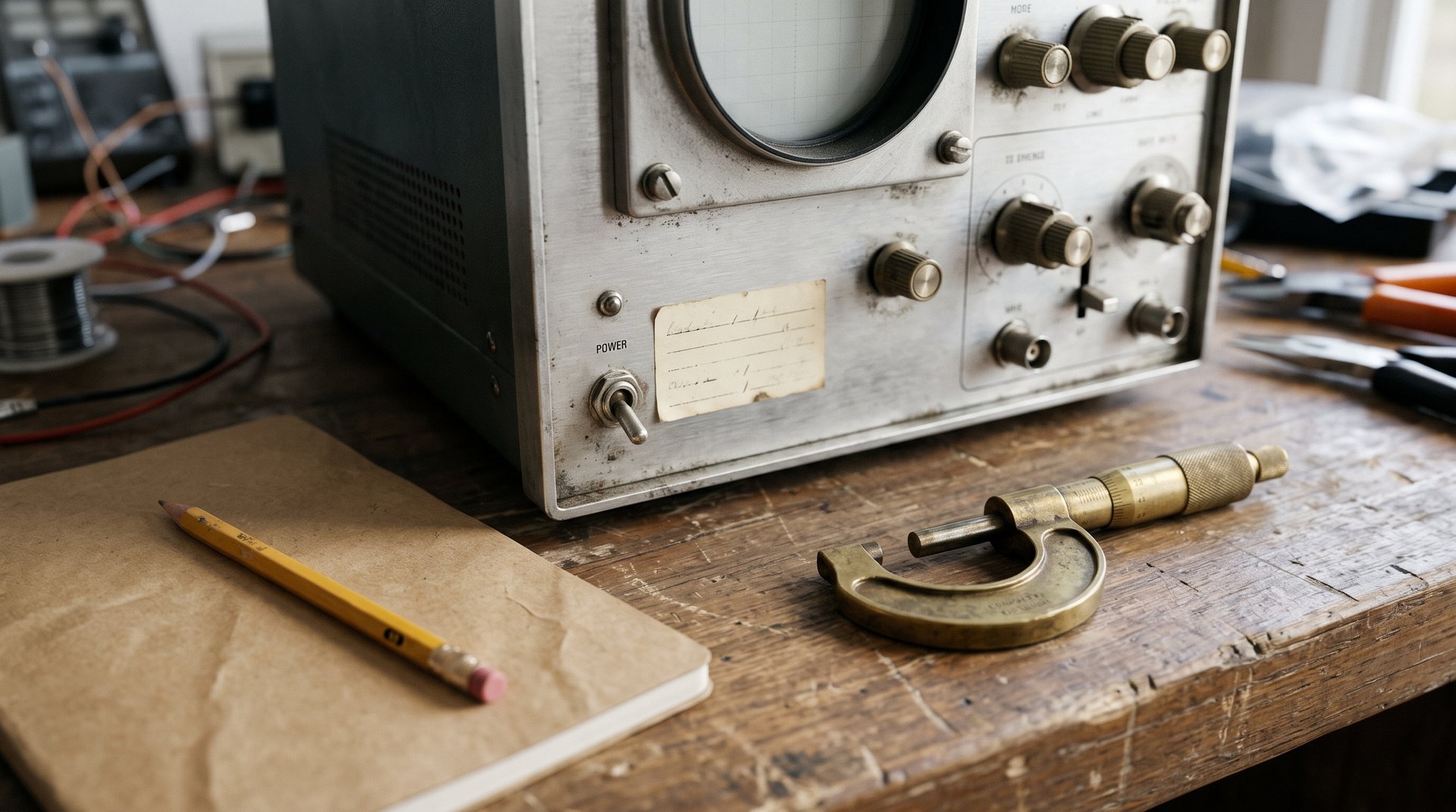
Every piece of test equipment in an Army electronics shop wore a small rectangular paper sticker right on the front bezel, right beside the power switch. It carried two dates: the day the instrument was last checked against a known reference standard, and the day its calibration expired.
If that due date had passed, you did not shrug and use the scope anyway. You pulled it off the bench and sent it to the calibration lab. Not because the scope looked broken—the screen still glowed bright green, and the knobs still clicked crisply—but because an uncalibrated instrument will lie to you with total confidence. It will tell you a five-volt rail is healthy when it is actually sagging at four-point-one.
You can see how quietly instrument drift sneaks up on a technician on the bench below. Slide the calibration off true and notice how easy it is to mistake a drifted meter for a faulty circuit.

When Certainty Replaces Calibration
The most dangerous moment in aviation, in software engineering, and in public life is identical: when we stop checking our gauges against an outside reference and start trusting the story inside our own head.
We see that failure mode everywhere in American politics right now. Entire cable networks, partisan clubs, and algorithmic echo chambers run on expired calibration stickers. Nobody checks the primary public record. Nobody asks a neighbor who voted differently what they are actually seeing on their street. Instead, we keep measuring the world with a meter that has been drifting for ten years, and then we get angry when reality refuses to match our screen.
The exact same trap shows up in our digital lives. When we hand our reading, our writing, and our memory to opaque centralized platforms—the enclosure we examine in The Architecture of Resistance—we surrender the reference standard. We only see what an engagement model decides to place on the glass.
Borrowing a Fellow Traveler's Reference Standard
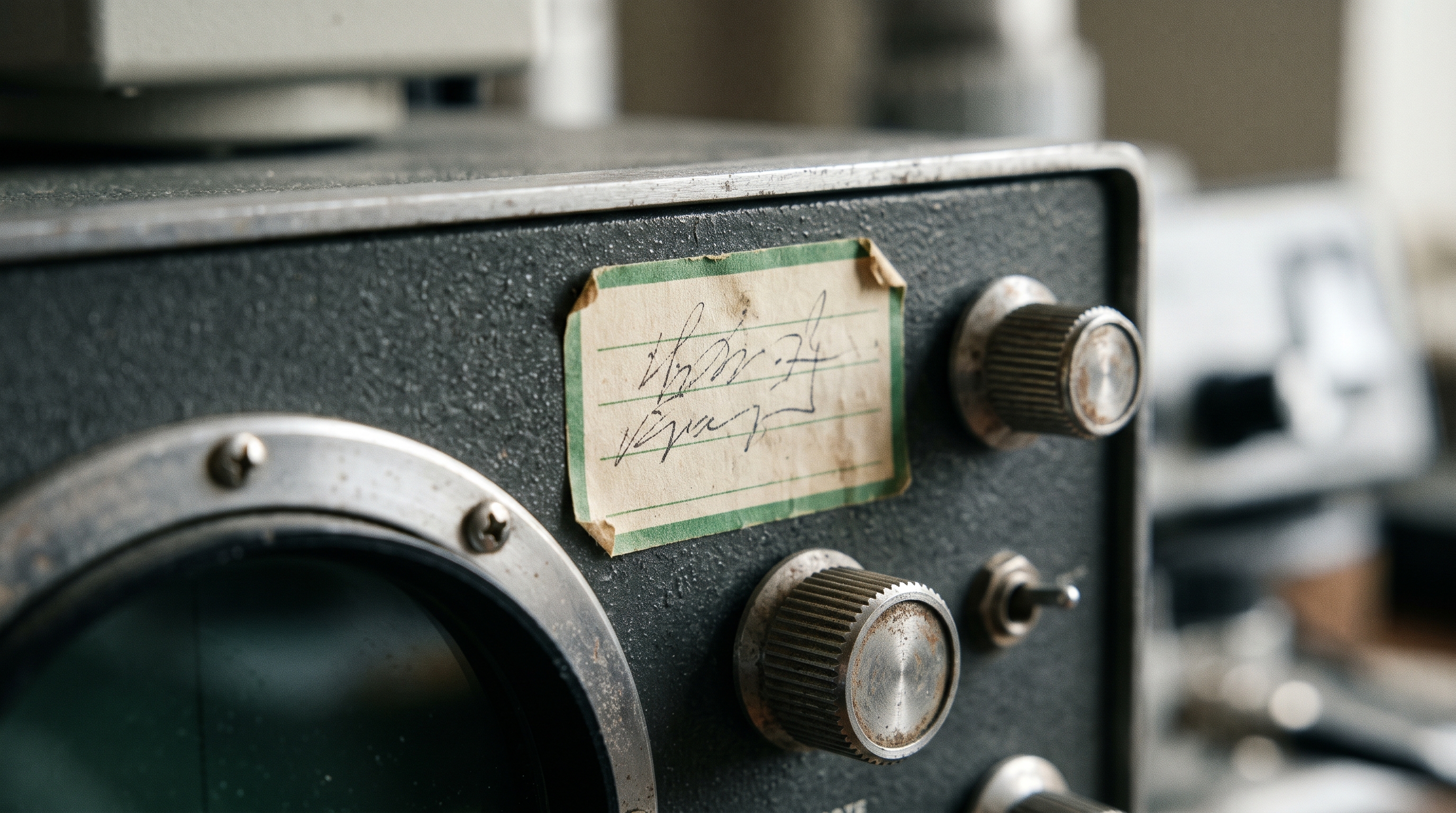
In recovery, we learn early that a lone human mind is a poor self-calibrating instrument. Under stress, fear, or exhaustion, my own internal meter can drift twenty percent off center before lunch. That is why fellow travelers matter—friends who love you enough to look at your reading and say quietly, "Are you sure about that, George?"
Citizenship needs the exact same discipline. Rebuilding civic sanity does not require winning an argument on television; it requires putting a calibration sticker back on our own bench—checking our beliefs against primary documents, local neighbors, and lived results.
A ninety-day calibration check for your own bench
- Check one primary source this week—a town budget, a utility filing, or a full court opinion—instead of relying on a thirty-second clip about it
- Trade honest notes with one friend or neighbor whose perspective differs from yours, listening for what they see from their angle without trying to win
- Audit your software and information stack for tools that hide how they rank, filter, or steer what you read
- Notice one belief you held five years ago that you had to update when better evidence arrived, and treat that humility as a strength
- Step outside to a real physical baseline—a trail, a garden bed, a kitchen table, or a workbench—whenever digital noise starts feeling like an emergency
An instrument that gets checked regularly does not become weak; it becomes trustworthy. Put a date on your own bezel, invite honest feedback, and keep your readings anchored to the real world.
Everything here is free. If this one helped you, there’s a tip jar.