
Square-Wave Media: How Outrage Clips Neighbors Flat
Crank an amplifier past its headroom and a warm human voice clips into harsh distortion. Cable news and algorithmic feeds do the exact same thing to our neighbors.
Plug a warm acoustic guitar or a human voice into a clean amplifier, keep the input gain within the circuit's headroom, and the output matches the living curve—soft syllables, bright overtones, quiet pauses, and full dynamic range.
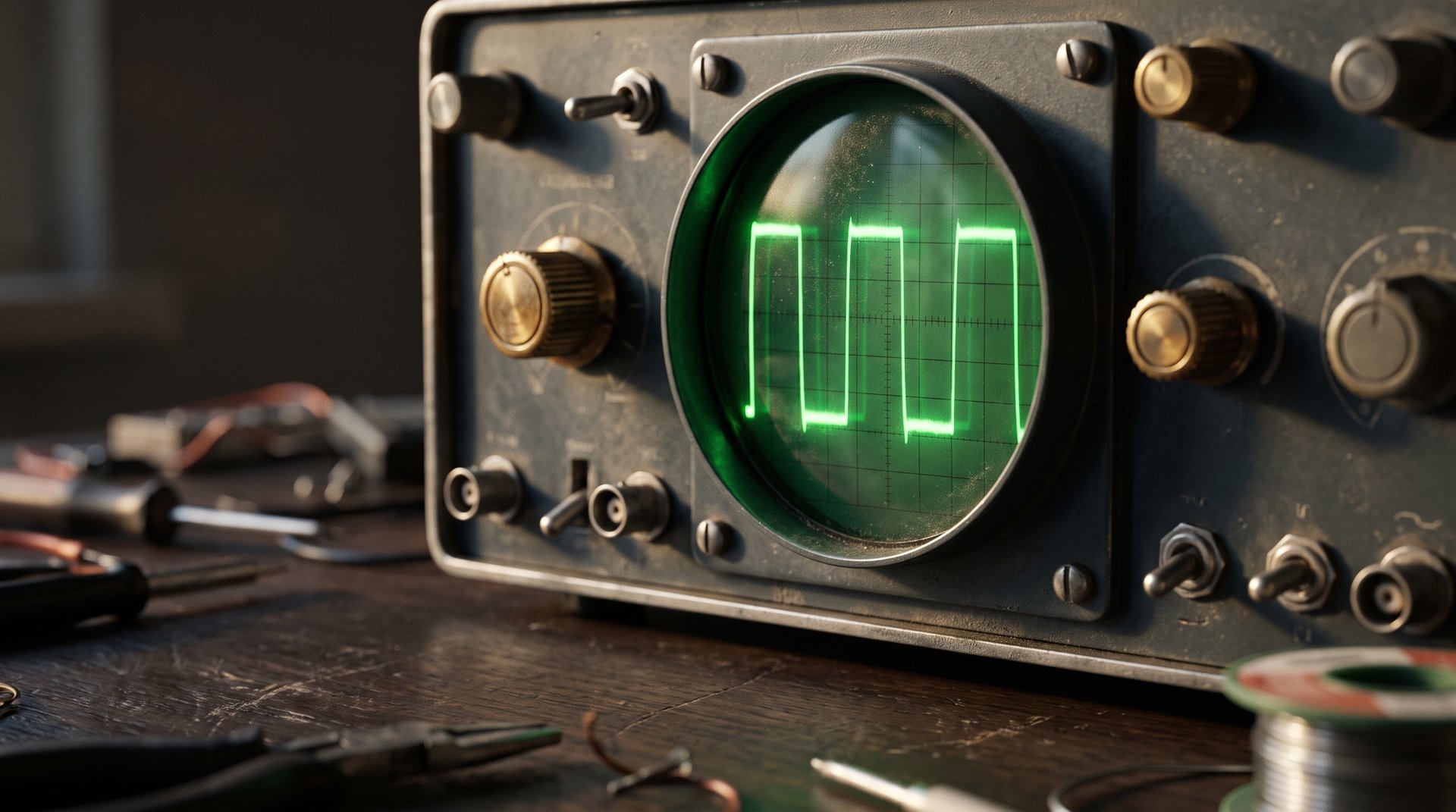
Now twist the gain knob all the way to the right until the signal slams straight into the power-supply rails. The rounded tops and bottoms of the waveform cannot climb any higher, so the circuit slices them off flat. What used to be a rich, unmistakable human voice turns into a harsh, buzzing square wave jammed hard against the upper and lower limits.
In audio engineering, that is called clipping. In American public life, we call it prime-time news and the evening scroll.
The Architecture of Permanent Overdrive
Every engineer knows that clipping does not happen by accident once you see the gain structure. You have to overdrive the input on purpose.
Modern corporate media and algorithmic social platforms are built as clipping engines. As we documented in our Library pillar Three Networks, One Ruling Class, nuance does not hold eyeballs through commercial breaks, and calm neighborly agreement does not keep people tapping notifications at midnight. Outrage does.
So the system cranks the input gain until every complex civic problem—healthcare costs, aging water plants, energy prices, family strain—gets slammed flat against two pre-wired rails: Red on the top, Blue on the bottom, nothing allowed in the middle.
Turn up the drive on the oscilloscope below and watch what happens when a smooth living curve runs out of headroom.

What Gets Lost When the Curve Flattens
Stand in line at a local hardware store or sit at a church supper, and almost nobody talks like a clipped square wave. Your neighbor might care deeply about fiscal discipline and worry about their grandmother's prescription bills. Another might hold traditional family values and distrust giant monopolies running up the electric rate. Real human beings live in the curve.
The moment we let a clipped feed narrate our neighbors to us, all of that living detail gets sheared off. We stop hearing the person standing across the porch and start hearing only the rail they were slammed against. Worse, clipped signals burn out speakers—and permanent outrage burns out citizens until they either lash out or walk away from public life altogether.
When a media machine strips away all headroom, it does not inform the public—it flattens living neighbors into predictable Red and Blue noise.
Turning Down the Input Gain
You cannot fix a clipped signal at the speaker; you have to reduce the gain at the input.
Reclaiming our civic headroom does not mean sticking our heads in the sand or ignoring real injustice. It means choosing honest instruments over overdrive machines:
- Step off the infinite scroll. Move your daily reading to chronological Really Simple Syndication (RSS) feeds, direct local reporting, and primary public records—tools where you set the volume instead of an engagement algorithm.
- Listen at local bandwidth. Before reacting to a national clip designed to spike your blood pressure, check what is actually happening in your own town and talk directly with someone who lives there.
- Protect the quiet hours. Give your nervous system real silence every morning and evening so your ears remember what an undistorted human voice sounds like.
A clean signal carries farther, lasts longer, and actually lets us hear one another. Turn down the gain, step back from the rails, and refuse to let anyone clip your neighbors flat.
Everything here is free. If this one helped you, there’s a tip jar.