
Sagging Shoulders and the Quiet Cost of Wear
Circuits and people rarely fail all at once. Long before a crash, creeping resistance rounds off the pulse—and routine maintenance beats heroic rescues every time.
Hardware rarely announces its retirement with a puff of smoke. More often, a circuit card sits quietly inside a rack for months while a microscopic film of oxidation creeps across its gold edge fingers.
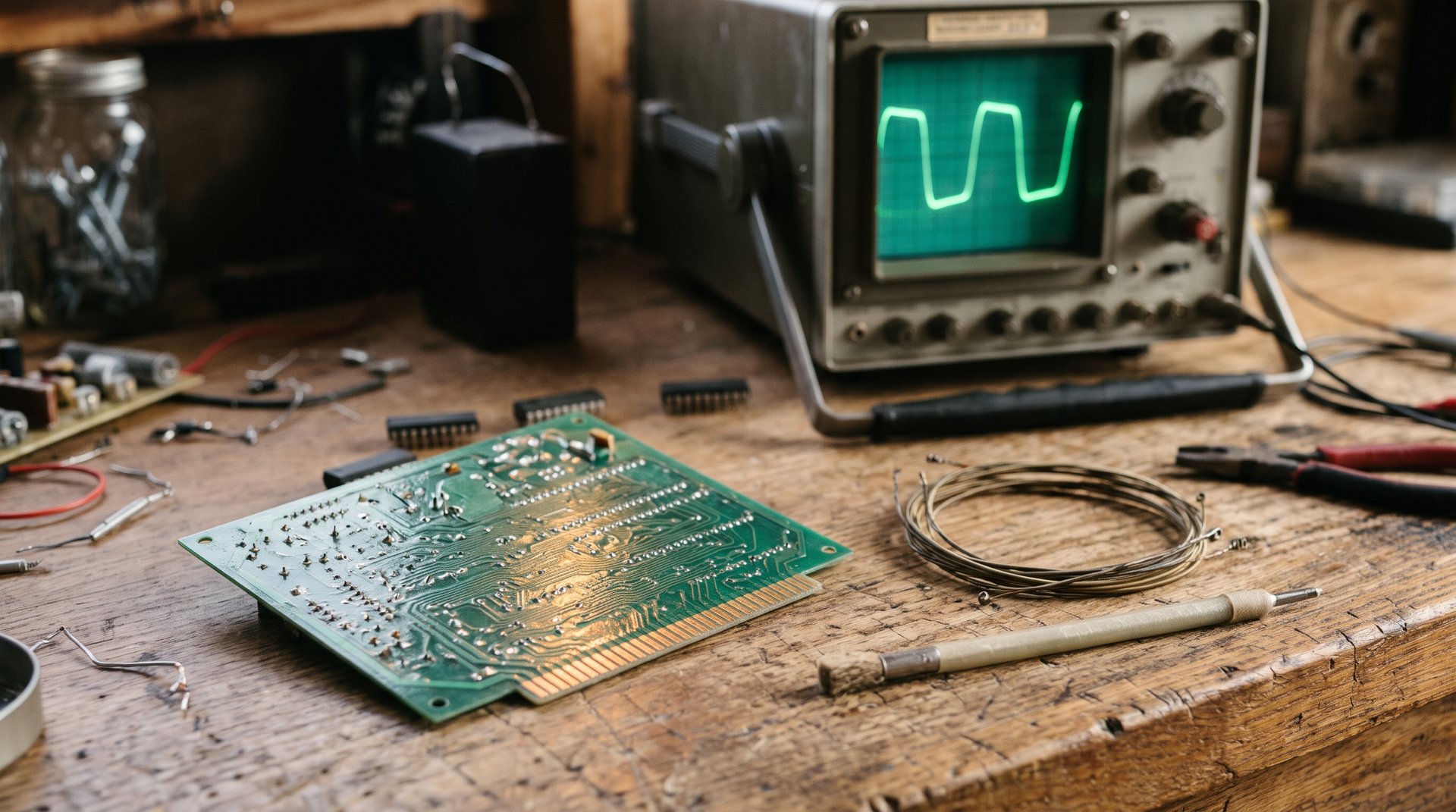
Nothing breaks on Tuesday. Nothing breaks on Wednesday. The computer boots, runs its jobs, and looks perfectly healthy from across the room. Yet if you clip a scope probe onto the bus and look closely at the rising edge of the clock pulse, you can see the warning sign long before the first parity error shows up: the crisp upper corner of the pulse has started to droop.
In the repair shop, we knew that shape on sight. Sagging shoulders.
How Silent Resistance Steals Your Rise Time
Every circuit trace has a small amount of natural capacitance. When the gold fingers on a Printed Circuit Board (PCB) are clean, electrical current rushes across the connector with almost zero resistance, charging the line fast enough to hit a solid five-volt plateau well before the next clock tick.
Add a thin layer of tarnish, dust, or loose tension in the backplane socket, and resistance climbs. That extra resistance teams up with the trace capacitance to slow the signal down. Instead of snapping cleanly into the high band, the pulse climbs sluggishly, rounding off its shoulder until it barely grazes the logic threshold—or misses it altogether.
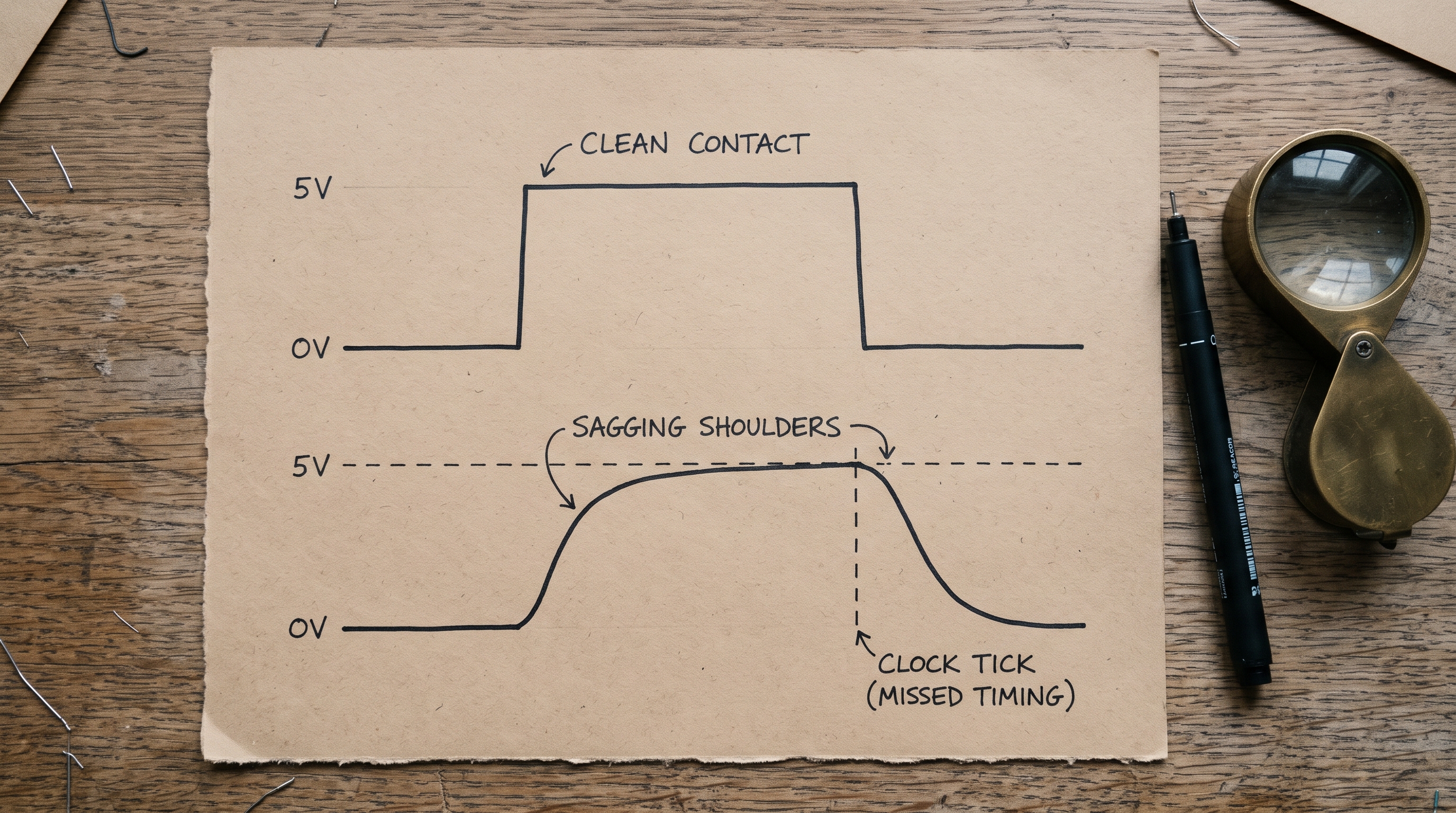
You can watch that exact decay happen on the bench below. Slowly increase Contact Resistance and notice how long the pulse still looks "mostly okay" right up until the shoulder sags across the threshold line.

Dead Strings and Tired Shoulders
You do not need a logic analyzer to recognize sagging shoulders in everyday life. Pick up an acoustic guitar that has been wearing the same set of bronze strings for six months.
The guitar still plays. Every note is still in the right place on the fretboard. Yet the bright attack is gone. The overtones feel muffled, the tuning drifts faster when you bend a string, and your left hand starts pressing harder than it needs to just to pull a clean sound out of the wood. Because the wear happened a fraction of a percent at a time, you barely noticed how much harder you were working—until the morning you finally coil up the dull wire and put on a fresh set.
Human beings wear down the exact same way.
We almost never collapse from a single dramatic blow. We get worn down by unaddressed friction—a month of cut-short sleep, a kitchen full of convenience food instead of honest cooking, a resentment we keep swallowing instead of naming, or a dozen small compromises with software and feeds that drain our attention every evening. From ten feet away, we are still showing up and hitting our marks. Up close, our shoulders are sagging.
Routine Maintenance Beats Heroic Rescues
Back in the Army shop, you did not wait for a board to fail in the middle of a mission before you pulled it out of the chassis. Preventive maintenance meant pulling cards on a schedule, inspecting the pins, and taking a fine fiberglass burnishing pen gently across the gold fingers before oxidation ever had a chance to build up.
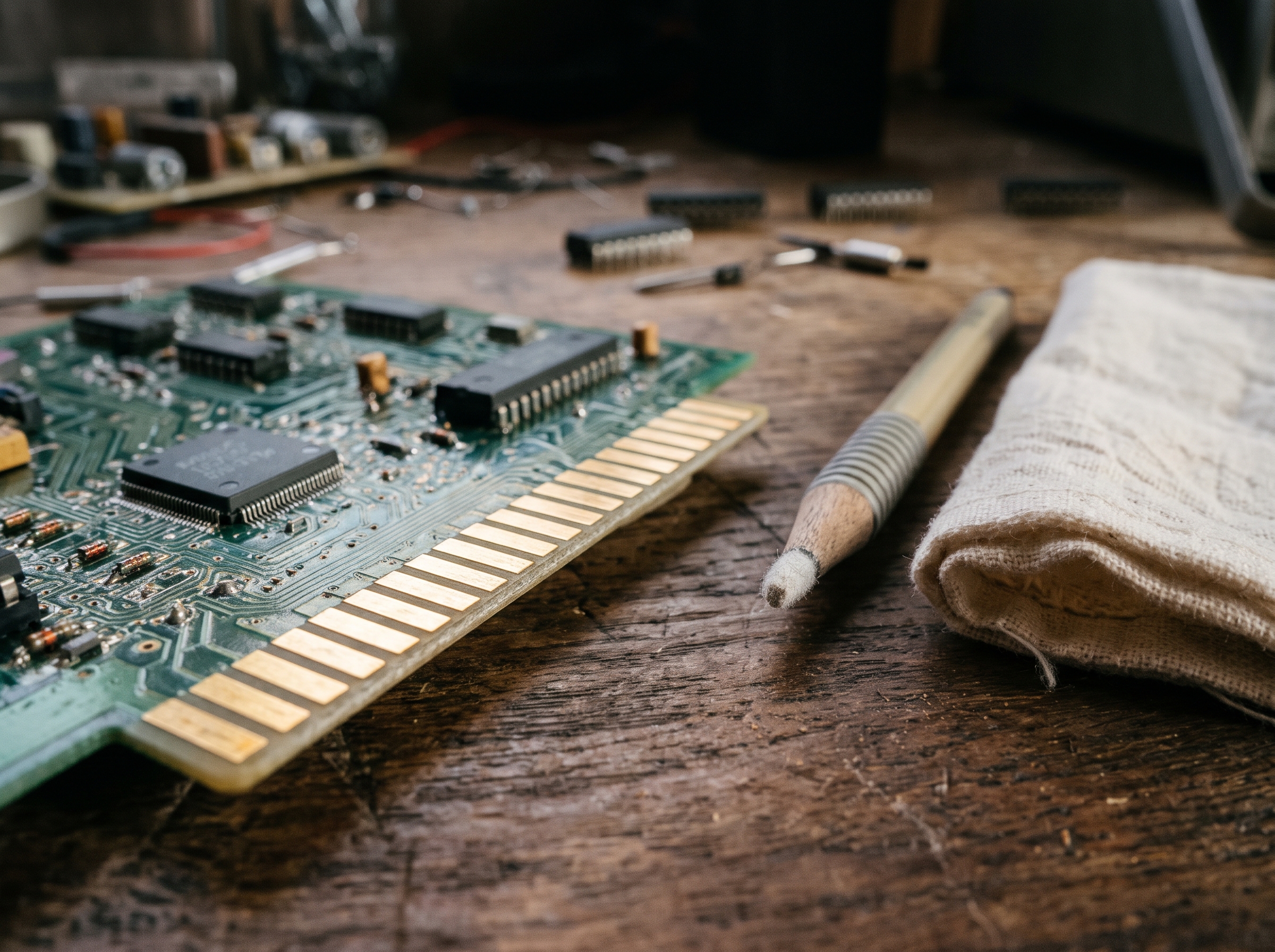
It takes five minutes of quiet care to wipe a connector clean. It takes five hours of frantic troubleshooting to chase down an intermittent crash once the board starts dropping bits.
The same math holds off the workbench:
- Check the subtle drag early. Notice when your morning routine, your body, or your favorite tool starts feeling heavier than it should.
- Lower the resistance before you crank the effort. Pushing harder through a dirty connection only generates heat; cleaning the contact restores the signal.
- Schedule the tune-up while things still work. Fresh strings, a walk along the creek, an early night, and an honest check-in with a friend cost very little when you do them on purpose—and save you from a hard crash later.
Do not wait for smoke to tell you something needs attention. Watch the shoulders, listen for the dull attack, and give the system a little care while the curve still has room to recover.
Everything here is free. If this one helped you, there’s a tip jar.