
Tuning by Ear: Why Living Music Refuses the Grid
An electronic tuner can tell you when a string hits exact pitch, yet real music lives in the bend. Choosing honest craft and living resonance over rigid, white-knuckle perfectionism.
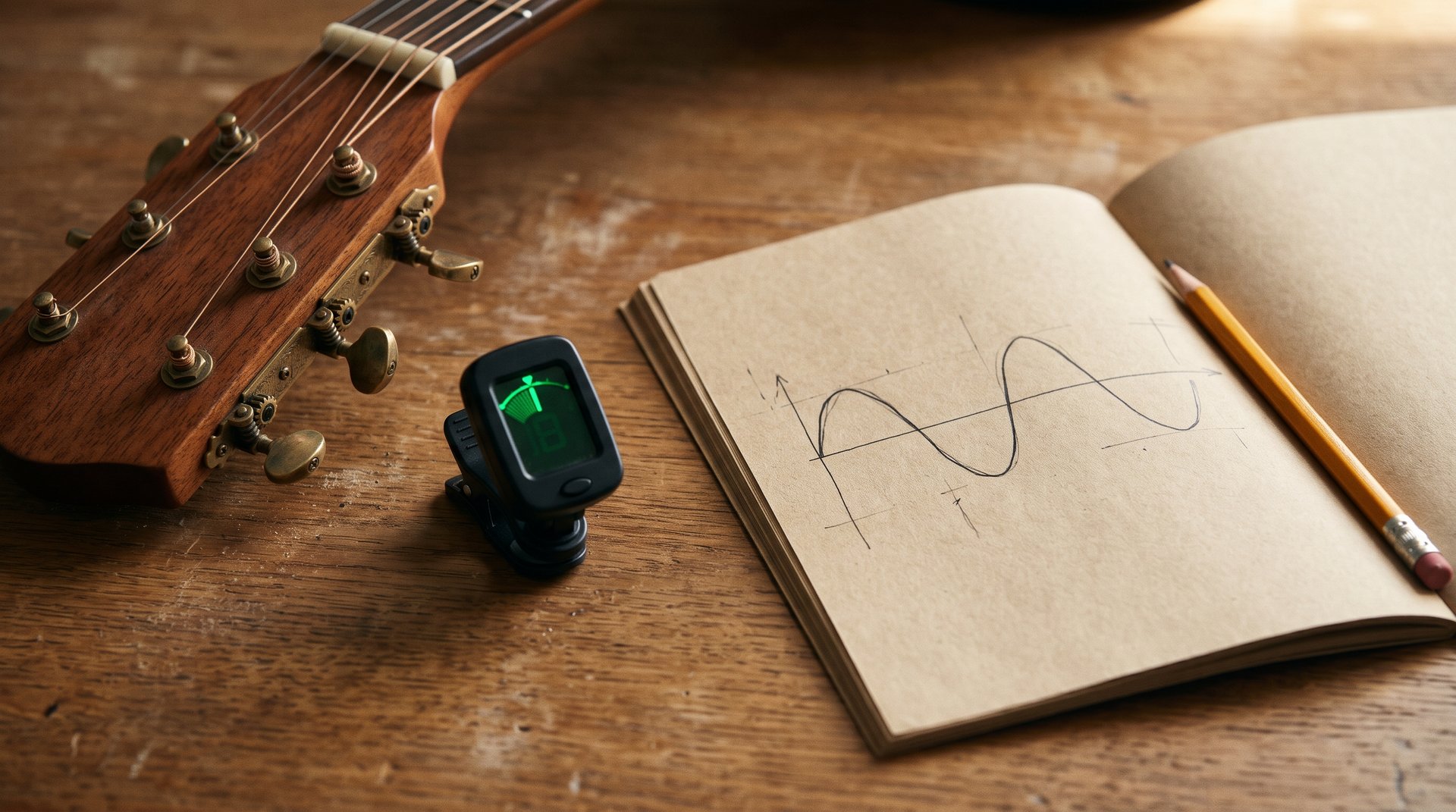
Clip a modern digital tuner onto the headstock of an acoustic guitar, pluck the open A string, and watch the little needle settle dead center at 440 Hertz. The screen flashes bright green. Mathematically, you have arrived.
Now strum an open E-major chord and actually listen. On almost every guitar ever built, at least one string will sound slightly sour against its neighbors even when every single open string passed the digital test. Guitar luthiers have wrestled with this for centuries. Because equal-tempered frets are a mathematical compromise across twelve keys, a steel string stretched down onto a nickel fret sharpens slightly under finger pressure. Real players learn to sweeten the B string by a hair, relax the left hand, and trust their ears over the green light.
What the electronic meter calls an error is often where the music actually lives.
When You Quantize the Soul Out of the Room
Spend an afternoon inside a Digital Audio Workstation (DAW) and you can see how seductive rigid perfection has become. One click snaps every drum hit onto a strict sixteenth-note grid. Another plugin pulls every vocal note dead center onto its nearest pitch line.
The track looks immaculate on the monitor—straight vertical bars, crisp edges, zero drift. Then you hit play, and it feels like a plastic flower. There is no push ahead of the beat when a chorus lifts, no gentle lean into a blue note, no breath between phrases. A human being bending a steel string a quarter-step toward a melody is not failing to hit a right angle; they are using the curve on purpose.
You can see—and hear—that living curve right on the bench below. Pluck the string, lean into the bend, and notice how a note breathes around exact mathematical pitch without ever snapping into a staircase.

White-Knuckle Control Versus Honest Craft
I spent thirty-five years writing software, and I have seen the exact same perfectionism trap ruin good engineering teams and hollow out good people.
Corporate hustle loves the green-light illusion: clean burndown charts, rigid playbooks, zero variance, and the quiet terror of making a visible mistake. When you live inside that mindset, you grip the neck of the guitar so hard your knuckles turn white. Every note goes sharp. Every code review turns defensive. Every small flaw in your day feels like proof that you are failing.
Real mastery works in the opposite direction—the shift I explored in Finding Freedom in Mastery. You do the unglamorous daily scales so your hands know where the frets are, and then you loosen your grip enough to listen to the room.
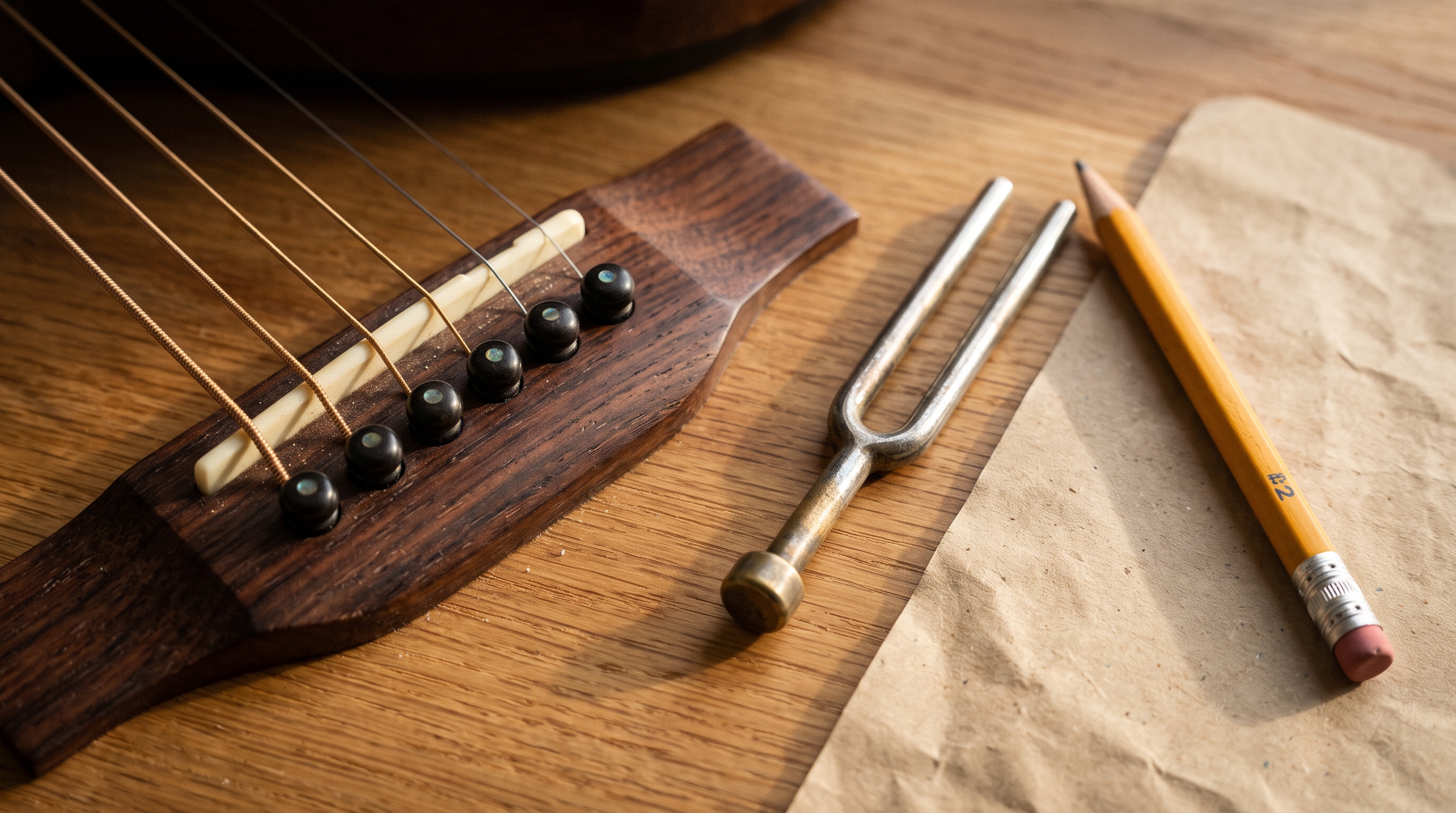
Perfectionism demands a straight line at all costs; mastery leaves enough room in the bend for a human being to actually play.
Practicing With Margin
Emotional sobriety asks for the same light touch. In recovery, I had to retire the harsh internal meter that graded every conversation as pass or fail. Some mornings I wake up a few cents flat. Some afternoons I press too hard when I am tired. That does not mean the instrument is ruined; it means it is time to pause, breathe, and tune by ear.
Keep the tuner in your case for a quick reference, and keep your ears open for the truth. A machine can hit a dead stop on the grid; only a living hand knows how to bend a note until it rings.
Everything here is free. If this one helped you, there’s a tip jar.