
Go Where the Trust Already Lives
On Thanksgiving morning, federal trust sits at 17 percent—but 67 percent of Americans still trust their local town. Here is the quiet, lawful Friday-morning move that builds real power.
Happy Thanksgiving. Before the kitchen fills with noise and the game goes on in the next room, take five quiet minutes at the table with me. All week we have read the gauges across four very different American places—Phoenix's July heat math, Boston's fifth-floor cliff, Clarksburg's 50-hour river clock, and Atlanta's shared cable tunnel. Today we arrive in Washington, D.C., not to ruin Thanksgiving dinner with partisan speeches, but to look honestly at one quiet fact that changes everything we do tomorrow morning.
Check the Gauges: One River and Two Very Different Trust Numbers
Even the nation's capital runs on a thinner physical margin than most of us imagine. The Washington metropolitan area draws its primary drinking water from a single source—the Potomac River—with roughly one day of backup supply if the intake is disrupted. Regional economists estimate that a month-long water outage could cost up to $15 billion in lost regional output.
Here is the good news that rarely makes cable television: local engineers are not waiting for Congress to notice. This year, the region's water utilities—including WSSC Water and DC Water—launched the $25 million Secure the Source Study to evaluate permanent secondary supplies, from repurposed quarries to advanced water reuse, and invited the public into the process.
Now put that physical gauge beside the civic gauge. Americans are often told our country has run out of trust. The actual polling tells a much more useful story.
Read those numbers twice. The trust is not gone. It is already local.

Carrie Stone's Walk—and What Actually Lasts
Earlier this week, I mentioned Carrie Stone, a 56-year-old Clarksburg resident who walked 200 miles on foot to Washington in October 2011 because she felt her government no longer represented her. I walked alongside that era's street protests myself, and I understand the ache that puts people on the highway.
Fifteen years later, across protests of every political stripe, the empirical lesson is plain: spectacles aimed at distant capitals burn out quickly, while patient local organizing endures. The parts of 2011 that actually changed lives were not the tent camps—they were the offshoots that built durable neighborhood muscle, like Occupy Sandy's storm-relief hubs and the Undue Medical Debt teams that partnered with local churches and towns to cancel billions in medical bills for working families. (In January, when the calendar turns, I will write a longer standalone piece examining why street spectacles across our political divide keep hitting the same wall—and what disciplined civic work looks like instead.)
The Door Is Not Locked—It Is Unattended
Here is the single most encouraging number I found all year. Ballotpedia tracked 76,902 U.S. elections in 2024 and found that 70 percent were uncontested. Through November 2025, 68 percent of 38,477 races had only one name on the ballot.
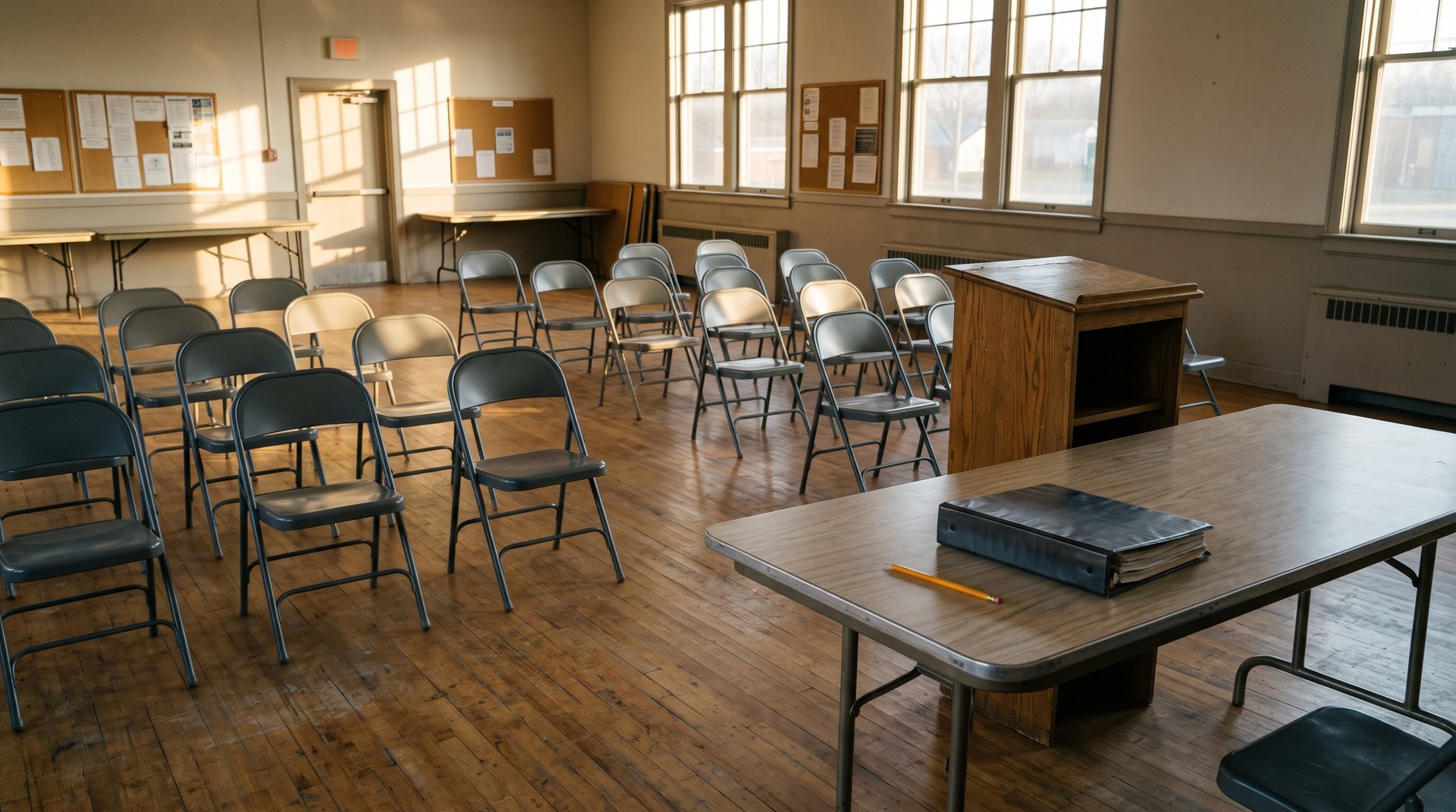
Across America, the rooms that control our water intakes, electric rates, school budgets, and emergency plans are not guarded by armored doors. Most nights, the folding chairs are half empty.
One day at a time is how a person recovers. One town at a time is how a country does. Rising up looks like showing up—nonviolent, lawful, and in the open—building the practical, neighbor-owned commons we explore in In the Shell of the Old and When Everything Runs on Duct Tape, Peace Is the Only Answer.
Organize Here: The Friday-Morning Ask
We have spent enough Thanksgivings arguing over national personalities who will never shovel our driveway or test our water plant. Tomorrow morning—when the leftovers are packed away—try a different move.
Friday morning: Three calm steps where trust still lives
- Household: Put your paper emergency sheet—water shutoff, utility outage numbers, medication list, and AM radio frequency—inside one kitchen drawer everyone in the house knows
- Block: Invite one neighbor whose yard sign looked different from yours for coffee or a porch chat this month, with zero television talking points on the table
- Room (under one hour): Pick one public body in your own town—water board, city council, school board, or county commission—look up its next open meeting date, and show up once with one printed public document in hand
Thank you for walking through these five towns with me this week. Put the phone down, pass the potatoes, and enjoy the people around your table. Tomorrow, we start where the trust already lives.
Everything here is free. If this one helped you, there’s a tip jar.