
Grid Down, Boston, Thanksgiving! Are You Prepped for Cold Turkey?
Officials tell us to pack 72 hours of supplies while painting targets on our grid. Before Thanksgiving, here is what really happens when the lights stay out—and how neighbors prepare.
It is the Sunday before Thanksgiving, and I find myself looking at the grocery list with two very different thoughts in my head. One is gratitude for a warm kitchen and a quiet table. The other is a hard look at the sad leadership running this country—politicians who have spent years slicing ordinary neighbors into Red and Blue tribes while picking fights across the globe that paint a target on the backs of every American household.
As I wrote on Friday in When Everything Runs on Duct Tape, Peace Is the Only Answer, our digital and physical commons are already straining under decades of deferred maintenance. Meanwhile, official emergency pamphlets still hand us the same polite advice: keep 72 hours of food and water in a closet and wait for instructions.
Let us face the truth together. Nobody in Washington, nobody on cable news, and nobody running a utility control room knows whether the next major grid failure will last four hours or four weeks.
What Does a Liberation Technologist Do?
When institutions run on bluster and cable news runs on fear, we have two bad habits offered to us: buy a basement full of tactical buckets and distrust everyone on our street, or turn the television up louder and pretend the gauges look fine.
Neither one keeps anybody warm. After thirty-five years of systems engineering—and enough hours flying on instruments to know what happens when you trust your gut instead of the panel—I believe calm action starts with honest specifications.
So today I am placing a full, evidence-led research brief into our public Library: When the Grid Stays Down. It pulls together peer-reviewed urban engineering, disaster sociology, and mortality forensics to contrast two opposite American failure modes—a summer heat blackout in Phoenix and a thirty-day Thanksgiving cold snap in Boston. No Hollywood zombies. Just thermal inertia, gravity, and how real human beings behave when the lights do not come back on.
Modern American cities are life-support machines disguised as real estate. When the electrical grid fails during extreme weather, survival depends on thermal inertia, gravity, and human social networks.
The Traps Nobody Warns You About
Most people assume that if you live in New England with natural gas in the street or 250 gallons of heating oil in the basement, you can ride out a winter power outage in comfort. That assumption gets people hurt.
More than 70 percent of Massachusetts homes heat with gas or oil, yet virtually every modern furnace and boiler stops cold the instant 120-volt electricity disappears. Thermostats, electronic control boards, igniters, draft fans, and water circulator pumps all require wall power. Because heating systems are hardwired into breaker panels, even a portable generator sitting in the driveway cannot run central heat unless a transfer switch was wired ahead of time.
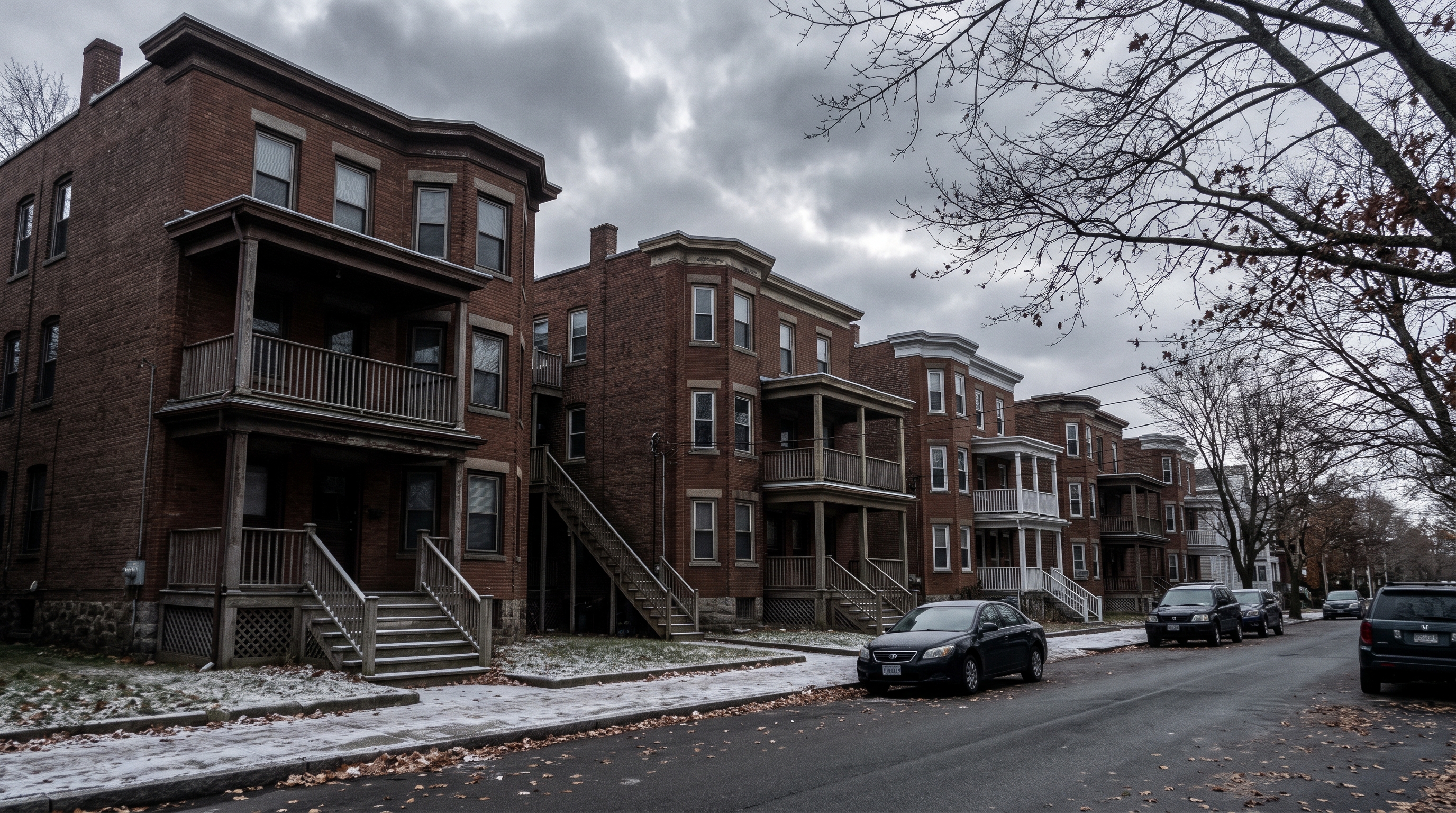
Water tells an equally counter-intuitive story. Roughly 80 to 85 percent of the water supplied by the Massachusetts Water Resources Authority (MWRA) flows eastward from the Quabbin and Wachusett reservoirs by pure gravity. A 1910 three-story walk-up keeps cold running water and flushing toilets as long as pipes do not freeze. Five floors up in a modern luxury high-rise, electric booster pumps lose pressure the moment standby diesel tanks run dry—turning penthouses into unlivable vertical islands while older residents struggle with pitch-black stairwells.
Why Neighbors Beat the Rumor Mill
Hollywood loves a collapse story where civilization evaporates at hour 73. Half a century of field research—nearly 700 disaster studies—says the exact opposite. Survivors remain overwhelmingly rational and generous, carrying out up to 90 percent of initial rescues and wellness checks themselves. Red yard signs and Blue yard signs stop mattering quickly when the family with a woodstove opens its living room to six older neighbors down the block.
What does turn dangerous in a long outage is an information vacuum. Once cell-tower backup batteries expire after 8 to 24 hours and televisions go black, vivid false rumors rush in to fill fourteen-hour November nights. After Katrina and Hurricane Sandy, invented stories of shelter massacres and stacked bodies terrified families and slowed real relief convoys. Knowing that pattern ahead of time is half the defense against it.
Before Thursday Hits the Oven
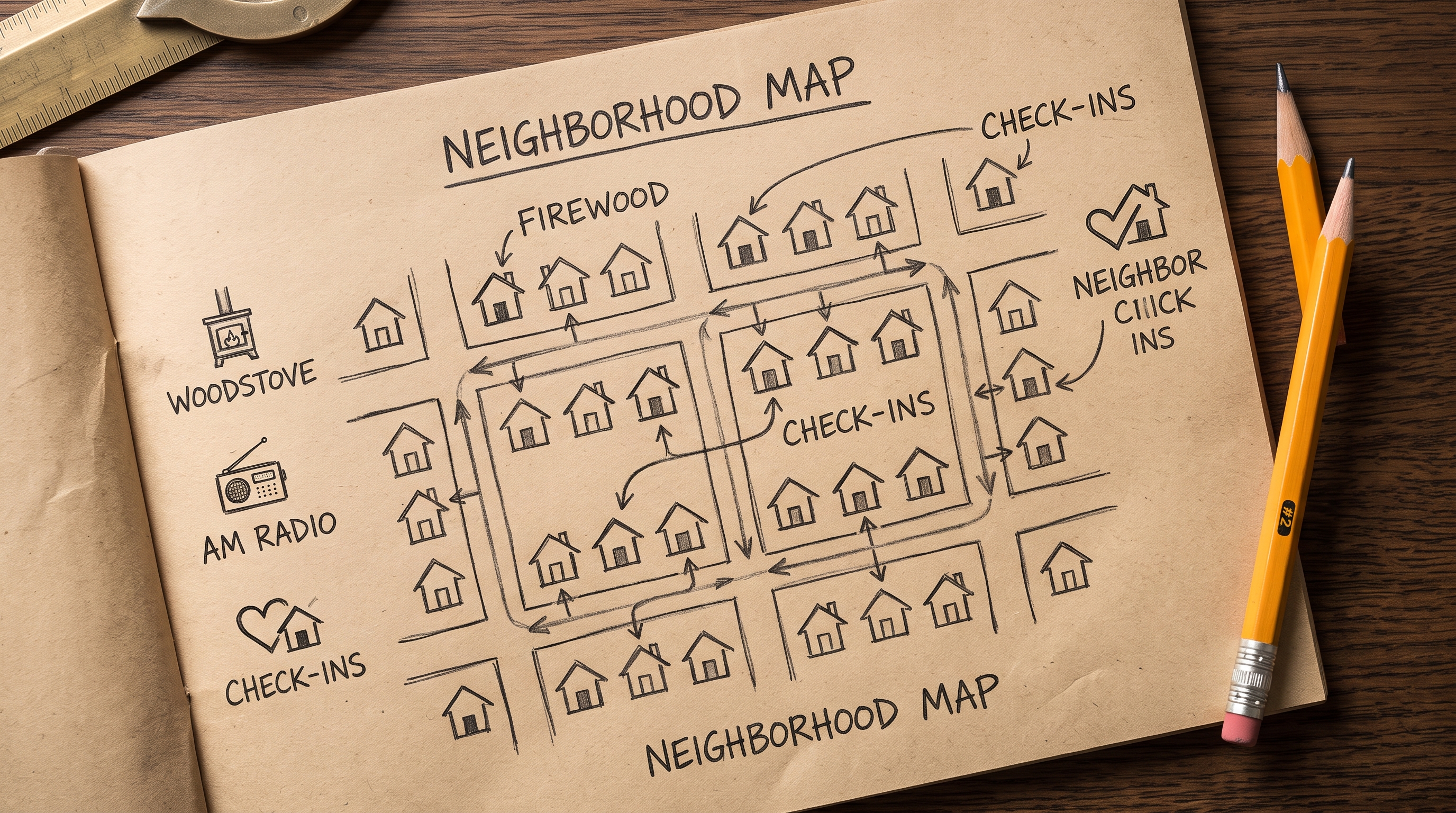
We cannot cure Washington's recklessness before the turkey goes in on Thursday morning. What we can do—right now, without panic and without buying into anyone's fear industry—is build a small pocket of grounded autonomy right where we live, the same practical commons we explore in In the Shell of the Old.
Sunday before Thanksgiving: A sane neighbor's triage
- Check whether your furnace or boiler depends on 120-volt power, and know what safe backup warmth you actually have
- Keep a battery or hand-crank AM radio with fresh cells so local broadcasts outrun street rumors
- Test a battery-backed carbon monoxide alarm, and never run charcoal grills, generators, or open gas ovens indoors for heat
- Write key phone numbers, medications, and water shutoff locations on paper before phones go dark
- Keep modest cash and three to seven days of real food and drinking water—plus extra if you live above the fifth floor
- Knock on one older or isolated neighbor's door this week so you are not meeting for the first time in a dark hallway
Take twenty quiet minutes this afternoon to read through When the Grid Stays Down in the Library, and share it with someone who prefers engineering facts over cable-news drama. Then go enjoy your Thanksgiving table. Cold turkey makes a fine sandwich on Friday; it makes a lousy plan for the winter ahead.
Everything here is free. If this one helped you, there’s a tip jar.