
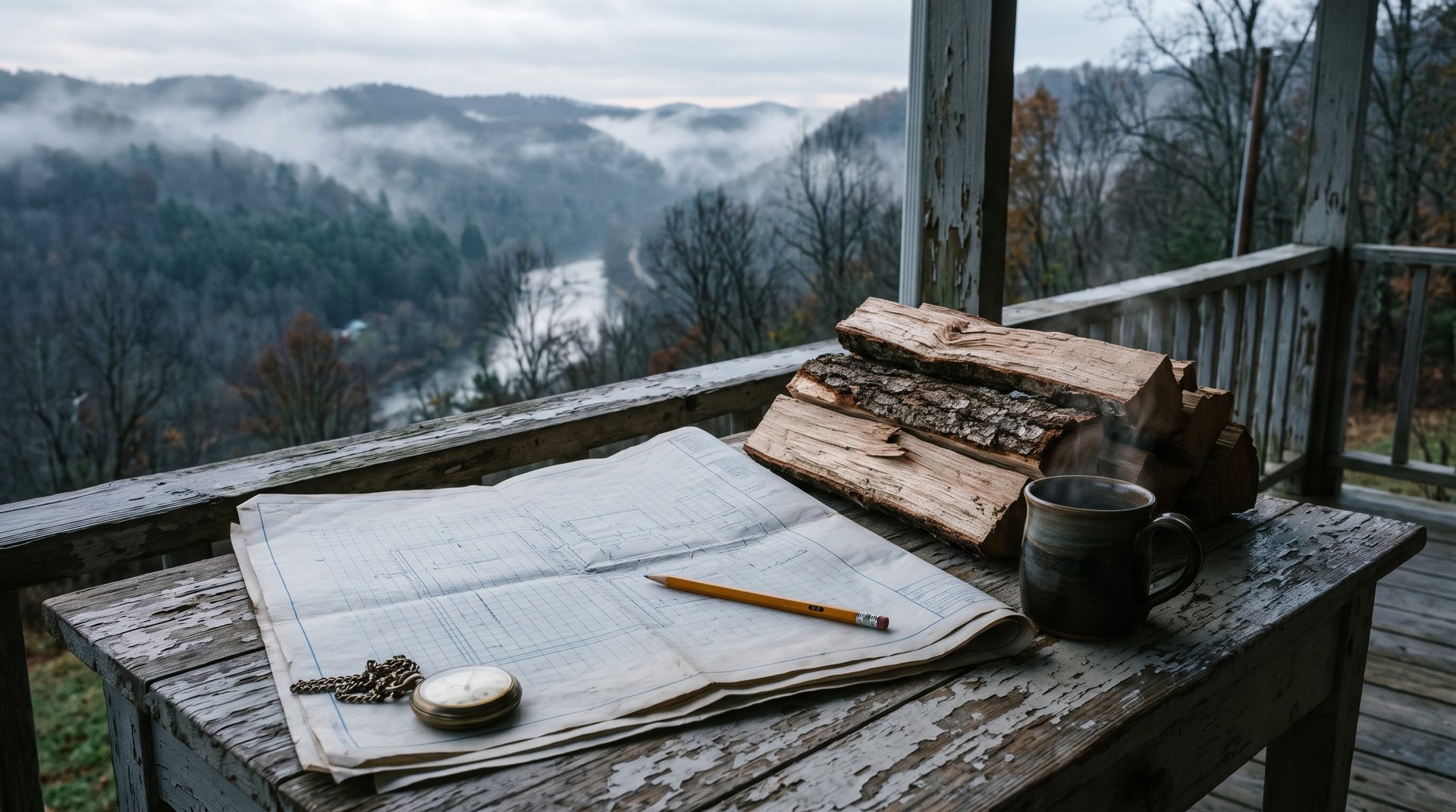
Faith, Family, Freedom, Football—and a Fifty-Hour Clock
In Clarksburg, West Virginia, tight-knit families, churches, and woodstoves can outlast a long blackout—except for one 50-hour municipal water clock sitting in plain sight on the river.
Tuesday morning in Clarksburg, West Virginia, smells like woodsmoke and wet oak leaves, and the buck firearms deer season opened yesterday across the hills. If you only watched big-city disaster movies, you might assume a small Appalachian town would fold faster than Boston or Phoenix if the electrical grid stayed down through Thanksgiving. What follows is a stress test built from Harrison County's own public engineering plans, census records, and lived history—and it reveals the exact opposite story.
Where Boston's blackout turns on vertical anonymity behind locked high-rise doors, Clarksburg turns on a surprising reversal. The social fabric here is remarkably strong. The municipal water pipe is remarkably thin.
Check the Gauges: A Fifty-Hour Water Clock
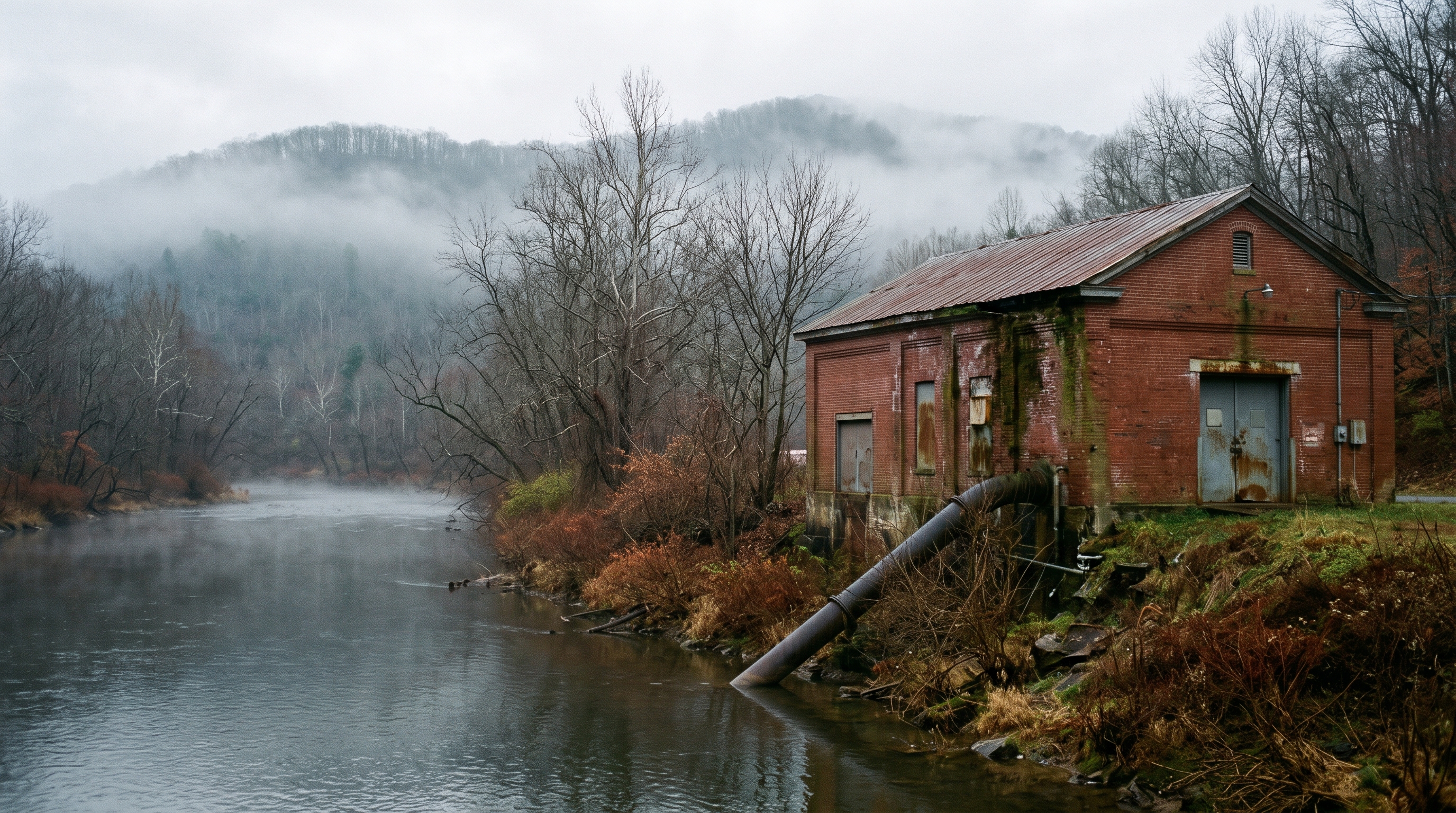
Unlike Boston's gravity-fed reservoir tunnels, the Clarksburg Water Board pulls 100 percent of its raw water from a single 30-inch intake on the West Fork River, with no secondary water source. In its October 2023 Source Water Protection Plan, the utility stated the risk plainly in its own public record: the plant relies on an aging 1,000-kilowatt backup generator holding 2,500 gallons of diesel on site—just 50 hours of runtime—paired with 12.2 million gallons of tank storage, or 1.4 days of average demand.
Clarksburg does not have to guess what happens when that plant loses power. During the November 1985 flood, river water submerged the South Chestnut Street plant's electrical gear and left the city completely dry for five days while crews isolated a single tank strictly for firefighting. Twenty-seven years later, the June 2012 derecho knocked out power to 688,000 West Virginia customers—63 percent of the state—and forced 27 of the state's 50 emergency 911 centers onto backup or degraded operations for days.
Home heating splits down the middle. Nearly half of West Virginia homes (46.2 percent) heat with electricity and go cold the instant the line drops, alongside modern gas furnaces that need 120-volt wall power for blowers and control boards. Yet 14 percent of West Virginia households burn wood, Harrison County sits atop dense natural-gas lines, and state fire code permits permanent unvented gas wall heaters in one- and two-family homes. When the grid fails here, three generations do not wait for a convention-center cot—they pack the chest freezer into a pickup and consolidate into whichever grandparent's homeplace has a woodstove or a standing-pilot gas range.
Myth Versus Forensic Reality
Hollywood pictures rural blackouts turning into armed roadblocks by nightfall. Half a century of disaster sociology tells a calmer story: in a town where shopkeepers, deputies, linemen, and church deacons went to high school together, neighbors know who lives in every hollow. Thanksgiving week coincides with buck firearms season (November 23 through December 6), when garages already hold venison and camp propane, and the West Virginia Secondary School Activities Commission (WVSSAC) playoff rules already allow 1:30 p.m. daylight kickoffs on Thanksgiving weekend.
The real dangers here are quieter and closer to home:
- Fierce pride behind closed doors: An older veteran or widow who insists "I am fine, don't fuss over me" while running an unvented heater with every window sealed—or chaining a generator too close to a basement window—faces lethal carbon monoxide and hypothermia risk.
- Medical transport down icy hollows: Keeping dialysis patients, home-oxygen users, and addiction-recovery neighbors connected to WVU Medicine United Hospital Center (375 beds), the Louis A. Johnson VA Medical Center (143 beds), and Highland-Clarksburg Hospital (150 behavioral beds) becomes a race against fuel and road ice.
- Outsider rumors in dead air: When ridge-top cell towers go dark, rumor mills shift from urban gang myths to false stories of out-of-state caravans coming down I-79—turning healthy watchfulness into needless fear.
Who Built the Fragility—and Who Is Already Fixing It
Small post-industrial cities did not get aging water plants by accident. Decades of deferred infrastructure investment and a widening split between suburban payrolls and older urban neighborhoods left Clarksburg absorbing high utility, housing, and medical burdens.
Yet real repair work is already underway in plain sight. The Clarksburg Water Board deserves honest credit for publishing its Source Water Protection Plan publicly instead of burying the numbers, and for pushing forward with a $19 million state commitment to replace final-phase lead water service lines. Local Volunteer Fire Departments (VFDs), church fellowship kitchens, Central WV Community Action, and the United Way Resilience Collaborative already run the real safety net every week of the year.
Clarksburg also knows how to organize when it counts. In October 2011, a 56-year-old Clarksburg resident named Carrie Stone—disappointed in the president she had supported—walked 200 miles on foot from Clarksburg to Freedom Plaza in Washington, D.C., because she felt her government no longer represented her. Seven years later, during the 2018 "55 United" educators strike, Harrison County teachers and school staff did not pitch tents in a park; they packed Jewel City Church, voted 90 to 98 percent in favor of coordinated action, and organized local food packs so low-income kids would not go hungry.
One day at a time is how a person recovers. One town at a time is how a country does. Rising up looks like showing up—nonviolent, lawful, and in the open.

Organize Here: One Document, One Room, One Hour
In Clarksburg, the public rooms where water and county resilience are decided are the Clarksburg Water Board and the Harrison County Commission. Wherever you live, your equivalent rooms are your municipal water authority and your county board of commissioners.
One hour this week: Audit your town's water and kinship clock
- Household: Check your carbon monoxide alarms with fresh batteries, locate your main water shutoff valve, and verify whether your home heat survives without 120-volt wall power
- Block: Call or visit one older neighbor, veteran, or solo household on your street—especially anyone on home oxygen or regular prescriptions—and trade phone numbers on paper
- Room (under one hour): Download your town's Source Water Protection Plan or annual water report, highlight one single-point-of-failure number like backup generator fuel hours, and put the next open water-board or county-commission meeting on your calendar
We do not have to wait for the river to rise or the lights to blink to act like neighbors. Pull the document, thank the crews keeping the pumps turning, and walk into the room together.
Everything here is free. If this one helped you, there’s a tip jar.