
Well, Speaking of Crusades and History Rhyming
Nine hundred thirty-one years after Clermont, a bounded request for military help still spirals into regional war—and the slogans still get written after the blood dries.
On November 27, 1095—nine hundred and thirty-one years ago today—Pope Urban II stood before a crowd at the Council of Clermont in France and lit a fuse that burned for centuries.
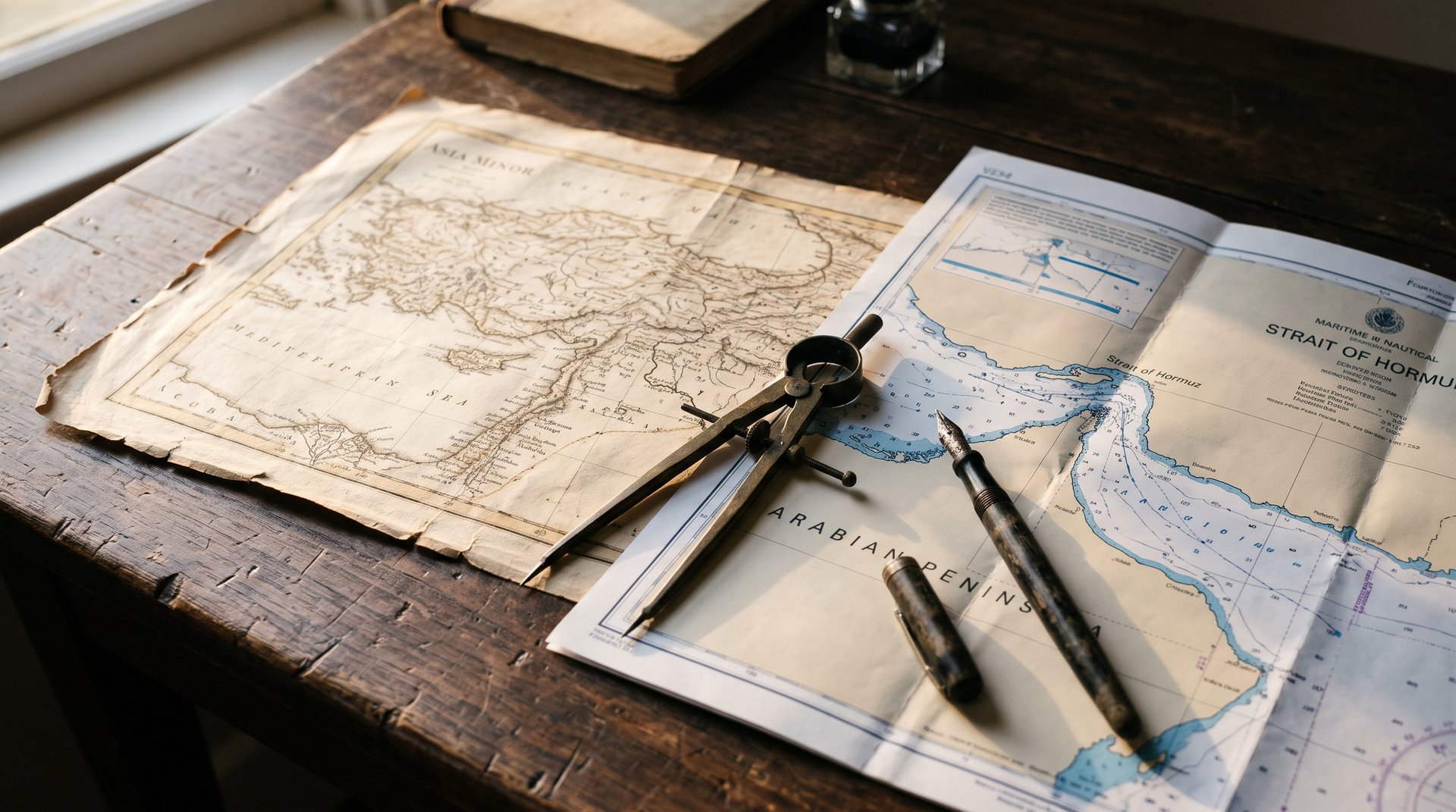
What arrived on his desk earlier that year was a specific, bounded request. Envoys of the Byzantine emperor Alexios I Komnenos had traveled to a church council in Piacenza asking for military help to push the Seljuk Turks back in Asia Minor. What left Clermont was something else entirely: an armed pilgrimage, backed by papal authority, with Jerusalem as its destination.
When I look at that gap with an engineer's eye, I recognize a failure mode we still have not debugged. In software, we call it catastrophic scope creep. In geopolitics, we call it a crusade—and ordinary people pay the invoice for generations.
When the Requirements Drift From the Map
Urban did not just relay Alexios's request; he rewired its incentives. The Council of Clermont offered a plenary indulgence—the remission of all penance owed for sins—to anyone who joined the march out of devotion. In one chronicler's telling, Urban also urged Western knights accustomed to private warfare against other Christians to redirect their violence eastward. Historians note he may also have hoped that rescuing Byzantium would help mend the rift between Rome and Constantinople, though that remains an interpretation rather than a stated goal we can prove from the speech itself.
Either way, notice the architecture of the pitch: take unresolved local violence, wrap an external campaign in total moral absolution, and promise that one righteous march will settle the map. Once that mechanism starts spinning, nobody keeps control of the boundary conditions.

: Council of Piacenza
Envoys of Byzantine emperor Alexios I Komnenos ask Western church leaders for military aid to recover territory taken by the Seljuk Turks in Asia Minor.
: Pope Urban II speaks at Clermont
Urban widens the appeal into an armed pilgrimage to aid Eastern Christians and recover holy places, backed by a plenary indulgence.
: Urban's December letter
Closer to the event than later chronicles, Urban's own letter confirms the call to free Eastern churches and the remission of sins, without recording the famous chant.
: Rhineland massacres
Crusading bands slaughter Jewish communities along the Rhine, hundreds of miles from the border Alexios asked for help defending.
3 years with no entries
: Capture of Jerusalem
Main crusading armies storm Jerusalem, killing many Muslim and Jewish inhabitants and establishing Latin Christian states in the eastern Mediterranean.
Nobody Has the Tape From Clermont
Did the crowd really roar Deus vult!—"God wills it!"? Maybe, but we simply do not know. No verbatim record of Urban's speech survives. The famous accounts were written years later, after crusaders had already taken Jerusalem. Fulcher of Chartres kept the focus closer to aiding Eastern Christians. Robert the Monk gave Jerusalem the starring role and handed history the dramatic chant. Urban's own letter from December 1095—written much closer to the room—confirms the mission to free Eastern churches and the spiritual promise, yet never mentions the chant at all.
A slogan written after the walls fall always sounds cleaner than the smoke inside the room.
That habit of rewriting a messy escalation into moral inevitability is still running at full power. Today we do not wait years for a monastic chronicler; cable panels and algorithmic feeds clip the nuance flat before the dust even settles, turning complex human tragedies into square-wave outrage and managed spectacle.
A Millennium Later, the Same Rhyme
Look at the Middle East on this November morning in 2026. Nearly a thousand years after Clermont, the same structural rhyme is playing out in real time: limited objectives announced from distant capitals, followed by cascading spillovers that nobody can put back in the box.
Put the eleventh century next to this week's dispatches and the pattern jumps off the page.
Pattern | 1095–1099: First Crusade | 2026: Regional Spillover |
|---|---|---|
Original request or aim | Help Byzantium recover lost ground in Asia Minor | Limited strikes, deterrence, and regional truces |
Mission creep | Armed pilgrimage to Jerusalem and new Latin states | Multi-front war across Iran, Gaza, Lebanon, Yemen, and Gulf waters |
Bystanders far from the front | Jewish communities in the Rhineland; civilians in Jerusalem | Families in Gaza and Lebanon, Nepali workers, Italian civilians in Kuwait, ship crews |
After-the-fact script | Deus vult! framed by chroniclers after 1099 | Partisan victory laps and feeds insisting the next strike will bring peace |
In 1096, crusading bands never even made it out of Europe before massacring Jewish neighbors along the Rhine—people who had nothing to do with Asia Minor. When great powers and armed movements sanctify violence, the blast radius never respects the briefing slide. It hits a residential block in Gaza, a health clinic in Lebanon, a refinery worker from Nepal, or two technicians in Kuwait.
Refusing the Chant
As Ignacio Martín-Baró wrote in his work on liberation psychology, prolonged violence does not only shatter buildings; it warps the stories societies tell themselves so they can keep tolerating the intolerable.
Most of us are not sitting in a war room this morning. We cannot recall a carrier group or sign a ceasefire from our kitchen table. What is inside our reach is refusing to be recruited into the chant. Before we repeat a tidy slogan from either side of the aisle, we can check the primary log—Urban's December letter instead of the victory-lap chronicle, independent casualty and shipping data instead of the press conference. We can guard our nervous systems from machines built to sell us a holy war, and invest our energy in the quiet, unglamorous work of keeping our own communities whole.
Nine centuries after Clermont, history is still giving us the same lesson: when fragile systems run on duct tape, peace is not naive. It is the only architecture that does not burn down the house.
Everything here is free. If this one helped you, there’s a tip jar.