
The World I Was Born Into: Seventy Years of Unfinished Business
Seventy years ago on October 23, Hungarians rose up against authoritarian control. Born five months later, I look at how those same unhealed societal bugs have compounded into our modern digital panopticon—and how we finally fix the code.
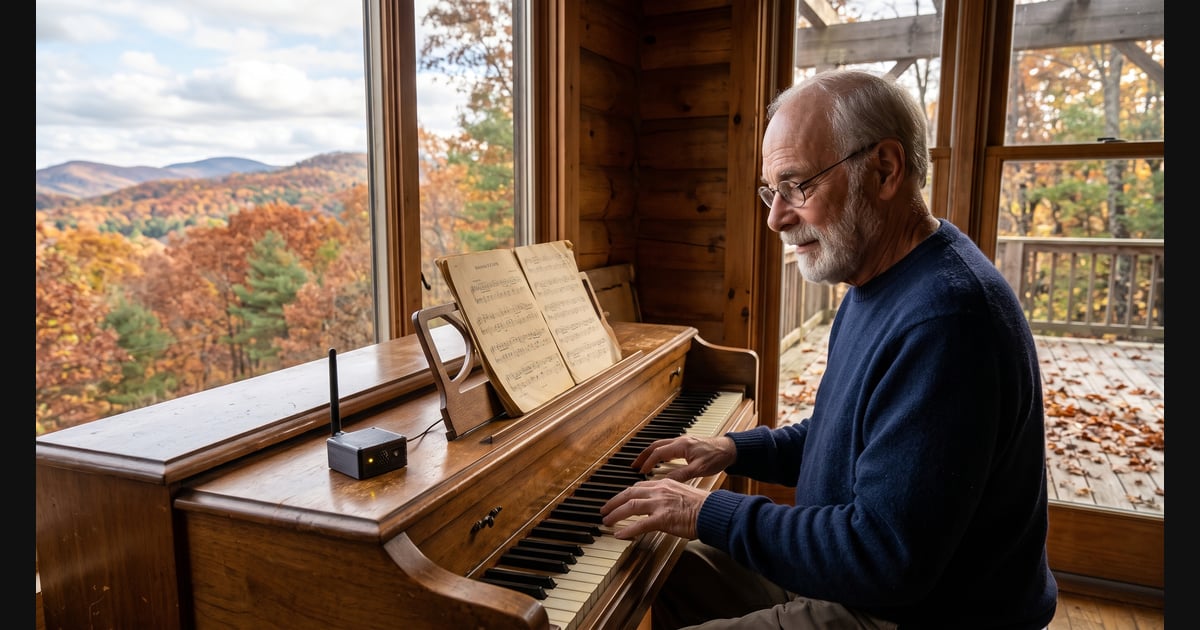
I spent this morning sitting at my piano, working through the haunting, minor-key melodies of a Béla Bartók folk dance. Outside my window, the late October wind was stripping the last brilliant gold and rust-red leaves from the oak trees. There is something about autumn in the mountains that invites reflection, especially when your fingers are searching for harmony on a cold keyboard while today's pot of homemade soup is simmering on the stove.
Today is October 23. Exactly seventy years ago today, in 1956—less than five months before I took my first breath—the people of Budapest poured into the streets. That was the world I was born into: a world of iron curtains, secret police, and a desperate, courageous cry for freedom.
It started with students and workers demanding simple, human things: free speech, fair elections, and an end to foreign Soviet control. They pulled down a massive statue of Stalin, and when the state security police opened fire, a peaceful march became a nationwide revolution. For a few shining days under reformist Prime Minister Imre Nagy, it looked like they might actually break free from the Warsaw Pact. Then, on November 4, Moscow launched Operation Whirlwind. Soviet tanks rolled in, crushing the uprising, killing thousands, and sending 200,000 refugees fleeing across the border.
As a retired software engineer who has spent over thirty-five years debugging complex systems, I look at 1956 and see a massive, unpatched vulnerability in the human operating system. When you ignore technical debt in software, the bugs don't just sit there; they compound until the whole architecture threatens to crash.
We never fixed what broke in 1956. We just upgraded the hardware of oppression.
Back then, authoritarianism required physical tanks in the streets and secret police tapping copper telephone wires. Today, as we navigate the revolutions brewing in 2026, the tanks have been replaced by algorithmic hegemony and the AI-driven panopticon. We face what researchers call the "digital double bind," where the very networks we need to work, eat, and connect are the exact same systems used for granular surveillance and censorship. Instead of the ÁVH kicking down doors, we have zero-click spyware, predictive policing, and algorithms designed to keep us exhausted, divided, and angry.
In my recovery communities, we talk a lot about what happens when we refuse to heal old trauma. As fellow travelers, we learn that if we don't face the dysfunction of our past, we end up recreating it in our present. Nations are no different than families. For seven decades, the world has tried to manage control rather than cultivate true freedom, and the unresolved pain has compounded.
But here is where my geeky joy kicks in: we don't have to accept a broken system. As Liberation Technologists, we are building the architecture of resistance right now. When regimes or monopolies try to flip the "kill switch" on human connection, we counter with decentralized protocols like Nostr and the AT Protocol that have no central server—no single statue or headquarters—for tanks to surround. We tinker with $50 LoRa radios to build off-grid Meshtastic networks that hop messages from neighbor to neighbor like an underground mycelium network in the forest floor. We use open-source AI and privacy-preserving cryptography to hand power back to ordinary people.
The students in Budapest in 1956 didn't lose; their courage simply went dormant until 1989, when Imre Nagy was finally reburied with honors and the wall came down.
We are seventy years older now—well, I almost am!—and we have better tools than ever to debug our world. We can step away from the rage machines, get a good night's sleep, share a warm meal, and build local, resilient networks of trust. Freedom isn't a default setting, my friends. It’s code we write together, one brave line at a time.