
The Next Step on the Trail: Avoiding Life's Unexpected Glitches
A perfect ten-mile autumn hike ended with a literal puncture on my porch. Looking back at almost 20,000 steps, it was the final one that tried to break the journey. Here is what an unexpected rusty nail taught me about the vital importance of building personal and digital resilience.
I’ve often thought the most important step on any hike is the next one. That next step has the power to ruin your day, land you in the hospital, or, if things go truly sideways, do worse. Yet, we rarely think about it when the weather is fine and the trail is calling.
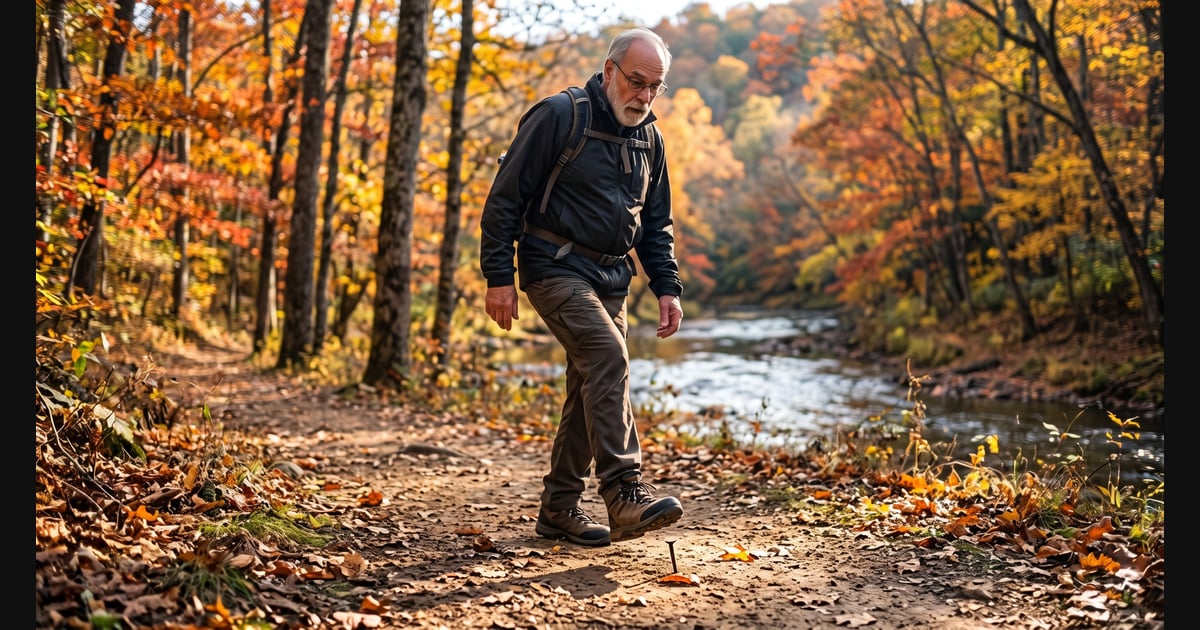
Yesterday afternoon here was absolutely picture-perfect—sunny, 78 degrees, with a light breeze, a lazy creek, and the leaves finally noticing that winter is on the way. I was out logging ten miles, enjoying the rich autumn colors and the quiet rhythm of the path. I had a truly great day, felt fantastic, and made it all the way back to my house. I stepped onto my porch, took my very last step, and immediately felt a sharp, unmistakable puncture.
A stray roofing nail had found my right heel.
The moment felt completely surreal. I knew what had happened instantly. My old diagnostic instincts must have kicked in because I did the best I could to transfer my weight rapidly onto my other foot, hopefully limiting the depth of the puncture. It bled moderately, but fortunately stopped quickly once I applied pressure. After cleaning it up, I did what any curious geek does: I hit the internet to figure out the best protocols. It turns out I have a forty-eight-hour window to update my tetanus shot, and I should probably get it inspected to ensure no stray debris is trapped inside.
Imagine taking roughly 20,000 successful steps yesterday, only for the very last one on my own doorstep to try and ruin the trip!
But it didn't really ruin it. Once I got it cleaned and slept on it, I realized it was just a temporary setback. Today, I’m off to urgent care to get it checked out. When you’ve been logging your walks for over twenty years and are approaching your second trip around the planet, you don't take chances with your hardware. Over my decades on the trail, averaging about seven miles a day, the distance adds up fast—210 miles a month, 2,520 miles a year, and 25,200 miles a decade. Since the Earth is roughly 24,000 miles around, I’m close to finishing my second lap and looking forward to my third. I’m certainly not letting a stray piece of steel keep me grounded.
Sitting here with my foot elevated, applying ice, my mind naturally wandered to systems architecture. When you’ve spent over thirty-five years working with software and digital networks, you start to see the entire world through the lens of resilience. That roofing nail was a classic "single point of failure."
In our increasingly centralized digital lives, we see this all the time. When we rely on massive, monolithic platforms or single algorithms, one bad update or corporate shift can take down the whole system. But as a liberation technologist, I’m passionate about building decentralized networks—systems like the AT Protocol or mesh networks that have no single point of failure. Much like my body instantly shifted weight to my other foot to protect the wounded heel, decentralized systems are designed to automatically route around damage, ensuring that no single failed node crashes the collective journey. They thrive on redundancy and community resilience.
Staying healthy, both physically and digitally, requires proactive maintenance. Getting this shot, eating home-cooked meals from my garden, and resting are how I maintain my biological hardware. Embracing open-source tech and decentralized networks is how we preserve our digital freedom.
We are all fellow travelers on this trail of life. When you hit an unexpected glitch—whether it’s a physical injury, a problem in your code, or a challenge in your day—don’t let it stop you. Treat the wound, build in some redundancy, rest up, and keep moving. Tonight, I won't be pacing, but I might be strumming my acoustic guitar or playing a little piano. The music is great for the soul, and before you know it, we’ll be back on the trail, taking that next important step. See you out there!