
The Endless Echo of Urgent Fury: Why History Keeps Repeating
On October 25, 1983, Operation Urgent Fury revealed how broken communication creates chaos. Over forty years later, our turbulent digital world shows we still haven't learned to truly connect. Let's look at how Liberation Technology helps us finally break this cycle.
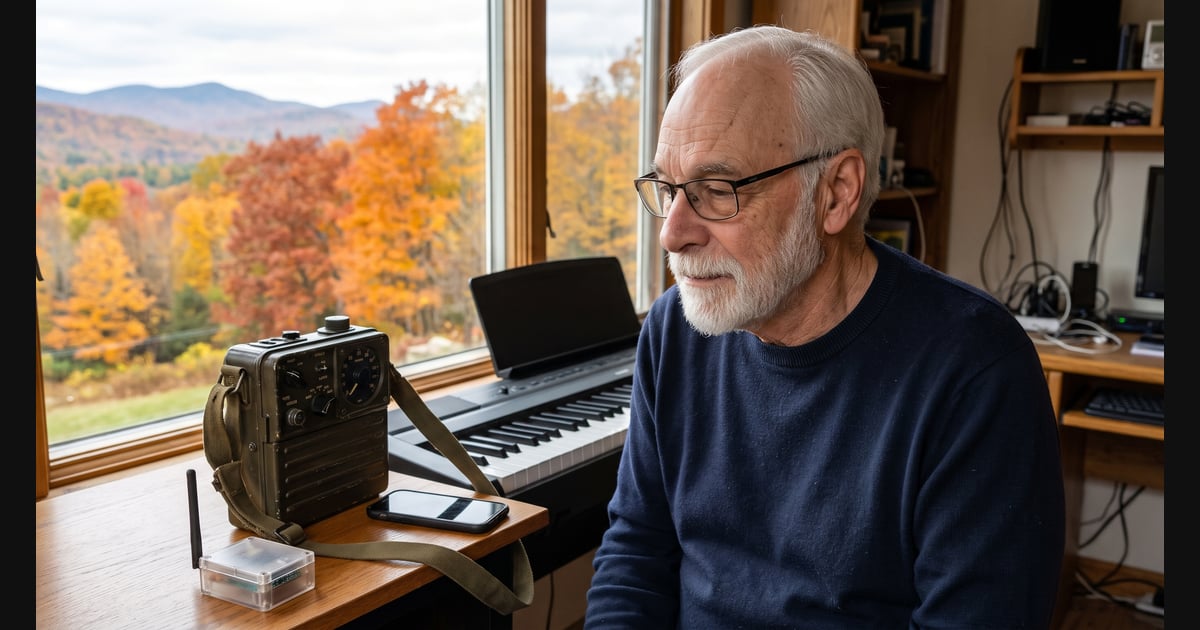
This morning, I sat at my digital piano with a warm mug of tea, working through a tricky chord progression while looking out the window at the late October leaves. In music, when two instruments are out of tune or playing in completely different keys, you get dissonance. It is jarring, noisy, and exhausting to listen to. To make harmony, the players have to listen to each other and share the same musical language. After a solid eight hours of sleep and a brisk walk out in the crisp autumn air, my mind was clear, and that musical lesson got me thinking about a piece of history that happened on this very day over forty years ago.
At dawn on October 25, 1983, the United States launched Operation Urgent Fury, the military invasion of Grenada. Back in my days as a Vietnam-era Army computer repairman, and later as a commercially licensed pilot, I learned firsthand that clear communication and good navigation are the difference between life and death. Yet in Grenada, despite achieving its immediate goals of rescuing American medical students and toppling a violent military council, the operation exposed a shocking system failure.
Because the mission was rushed together in days, our own military branches couldn't even talk to each other. Troops were forced to navigate using tourist maps and pages torn from magazines. Worse yet, Army and Navy radios were completely incompatible. In one famous moment, an Army officer actually had to use his personal credit card at a local payphone to call his base in North Carolina, just to ask for air support from a Navy ship sitting right offshore! That tragic chaos—which included a friendly-fire strike on a mental hospital—eventually forced Congress to pass the Goldwater-Nichols Act, compelling our armed forces to finally unify their communications.
As a retired CTO and full-stack software engineer with over 35 years of experience, I look at our turbulent world in 2026 and hear the exact same echo. We have upgraded our hardware from incompatible field radios to fiber optics and artificial intelligence, yet we still haven't learned the real lesson of October 25th. We are still trapped in silos, unable to communicate across our divides, navigating a chaotic world with bad maps.
In my work today as a Liberation Technologist, I see how modern centralized platforms and authoritarian systems intentionally keep us disconnected. Whether it is state-run "kill switches" shutting down the internet in conflict zones, or corporate algorithms trapping us in bitter echo chambers to maximize profits, the result is the same. We are shouting into payphones while the people right next to us are on a totally different frequency.
In recovery fellowships, we talk a lot about the danger of isolation. When we don't have a safe, honest way to communicate our pain and our needs, we act out of fear and trauma. We repeat the same destructive patterns over and over, wondering why nothing changes. Both in our personal lives and on the global stage, refusing to build genuine, open lines of communication always leads to collateral damage.
The good news is that we don't have to keep repeating this bug in our human code. True Liberation Technology is about building a new kind of "joint command" for humanity—one built from the ground up, not forced from the top down. By embracing decentralized protocols like Bluesky and Nostr, and off-grid tools like Meshtastic radio networks, we are creating resilient, trauma-informed spaces where communities can actually hear each other without an algorithm—or a censor—jamming the signal.
History only repeats itself when we refuse to inspect the faulty wiring. Today, let's choose to put down the old tourist maps, tune our instruments to the same frequency, and build the honest connections that set us free.
Everything here is free. If this one helped you, there’s a tip jar.