
Tailplane Ice, Split Government, and Ten Years of the Paris Agreement
As the Paris Agreement turns ten and yesterday's midterms deliver a split government, our nation feels caught in a dangerous aerodynamic stall. Here is how a former pilot and Liberation Technologist looks past Washington's gridlock toward decentralized protocols, local resilience, and shared recovery.
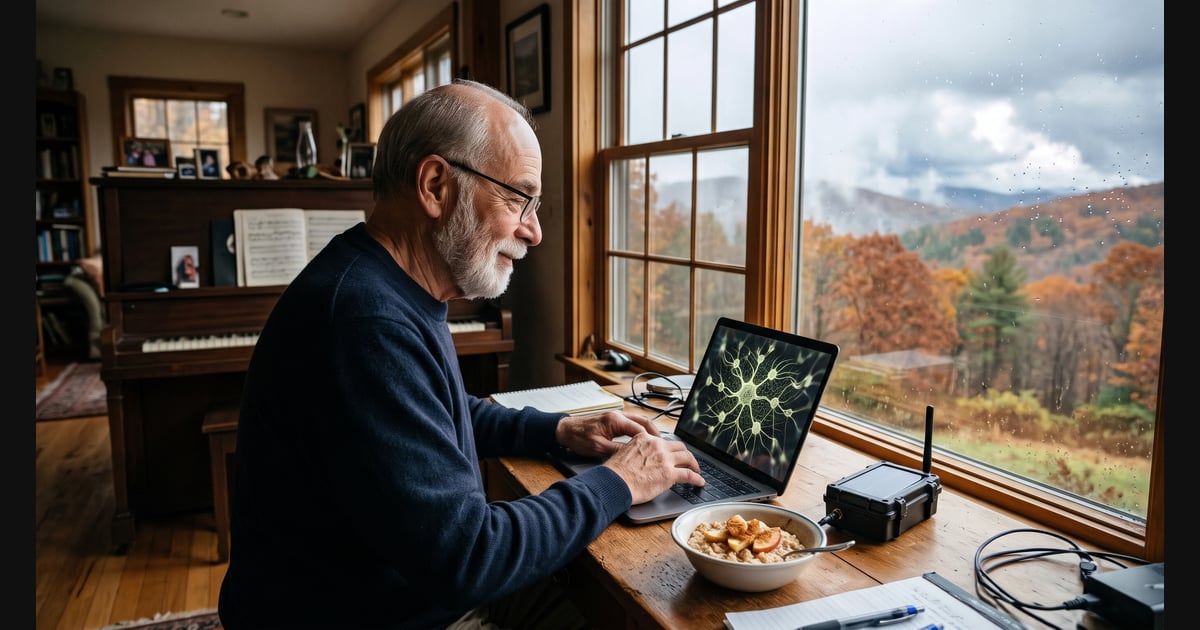
It is 54°F outside my window early this morning, with clear skies, periodic clouds, 85% humidity, and a 4 mph wind from the southeast. For early November here in the wooded hills, today's forecast of a 77°F high, a 52°F low, light daytime rain, a 10 mph south wind, and evening showers feels unusually warm. After eight hours of solid sleep, I started my day at the stove cooking steel-cut oats with apples, then spent twenty minutes at the piano practicing a gentle chord progression. Good rest, a home-cooked meal, and music keep my nervous system grounded before I open my laptop.
We need that grounding as we wake up to yesterday's midterm election results, where Democrats won control of both the Senate and the House while Republicans hold the presidency and a conservative majority shapes the courts. Watching our nation lurch from one extreme to another reminds me of what we share as fellow travelers in Adult Children of Alcoholics and Dysfunctional Families (ACA). When a household or a country hasn't healed its deeper wounds, it swerves across the road like an exhausted, intoxicated driver—piling up national debt and guaranteeing bitter infighting. Yet Marshall Rosenberg's Nonviolent Communication teaches us to look past reactive behavior to see unmet needs. Beneath the polarization, whether our neighbors voted blue or red, we all share a human need for stability, safety, and a livable future.
That need is front and center today, November 4, the exact ten-year anniversary of the Paris Agreement entering into force. A decade ago, the world united to hold warming well below 2°C—and pursue 1.5°C—through bottom-up Nationally Determined Contributions updated every five years. We have seen real progress: 194 parties remain onboard, 127 updated climate plans arrived between 2024 and mid-2026, and projected warming has improved from nearly 4°C to under 3°C. Next week in Antalya, Türkiye, COP31 opens under shared leadership between Turkish Minister Murat Kurum and Australian Minister Chris Bowen to turn pledges into action, including raising electricity's share of global energy demand from 23% to 35% by 2035. Still, current plans only cut 2035 emissions 6% to 9% below 2019 levels, and the United States exited the treaty a second time in January 2026.
As a commercially licensed pilot, watching a divided Washington wrestle in the middle of a storm makes me think of the tragic Learjet 60 crash in Florida a few days ago, where the crew reported severe icing and turbulence before a steep dive that separated the horizontal stabilizer. When ice builds on a horizontal stabilizer in a storm cell, it disrupts the tail's balancing force. If that tailplane stalls, yanking hard on the yoke only deepens the dive and can snap the stabilizer right off. Back when I repaired Army computers in the Vietnam era and studied digital electronics at university, we saw how out-of-phase feedback loops destroy hardware. Across almot 4 decades as a full-stack engineer, project leader, VP of Development, and CTO, I learned that pulling harder on a broken central lever never stabilizes a system.
That is where our joy as Liberation Technologists begins. When centralized politics freezes up, we don't have to panic in the cockpit; we can model ourselves after nature's underground mycelium network and build decentralized resilience from the ground up. With federated protocols like Bluesky's AT Protocol, censorship-resistant Nostr relays, off-grid Meshtastic radio nodes, and privacy-preserving local AI, communities can organize neighborhood solar, share garden harvests, and solve local problems without waiting on politicians or surveillance algorithms. Recovery reminds us that even when we cannot stop a dysfunctional giant from wavering, we always have agency over our own choices. Before today's rain rolls in, I am going to walk beneath the autumn oaks, turn my garden compost, and write some open-source code. Take heart, fellow traveler—when we ease off the yoke and link up locally, we can still stick the landing.