
Sharpening the Digital Saw: Learning, Teaching, and Building With AI Agents
From teaching C++ and Java in the 1990s to mastering Astro, Next.js, and AI coding agents in 2026, my love for learning and sharing knowledge has never faded. Discover how sharpening our mental saw empowers us as Liberation Technologists to build faster, teach others, and reclaim our creative freedom.
There is nothing quite like the crisp bite of a mid-October morning out here in the rolling hills. After a solid eight hours of sleep and a hot, home-cooked breakfast, I took a long walk down the trail to watch the maple and oak leaves turn brilliant shades of crimson and gold. When I got back inside, I sat down at my piano to run through a few chord progressions. If I skip practicing for a week, my fingers get stiff; when I play every day, the music flows effortlessly. That daily practice got me thinking about Stephen Covey’s famous advice in The 7 Habits of Highly Effective People: we always need to "sharpen the saw."
You have probably heard the old, cynical saying: "Those that can, do; those that can't, teach." Looking back over my thirty-five-plus years in software engineering, I have come to realize that those of us who get to do both are the truly lucky ones. Back in the 1990s, I spent my days in the trenches writing production code as an independent contractor. On the side, I taught C++ for a training company, standing in front of bright engineers at Big Pharma outfits and inside the halls of Big Blue—IBM itself. I discovered how much joy comes from sharing hard-won insights and watching a complex concept click for someone else. That passion for passing on knowledge led me to co-found a training company specializing in Java for the corporate world. Whether I was studying digital electronics at university, repairing Army computers in the Vietnam era, earning my commercial pilot license, or leading architecture teams as a CTO, learning and teaching were always two sides of the same coin.
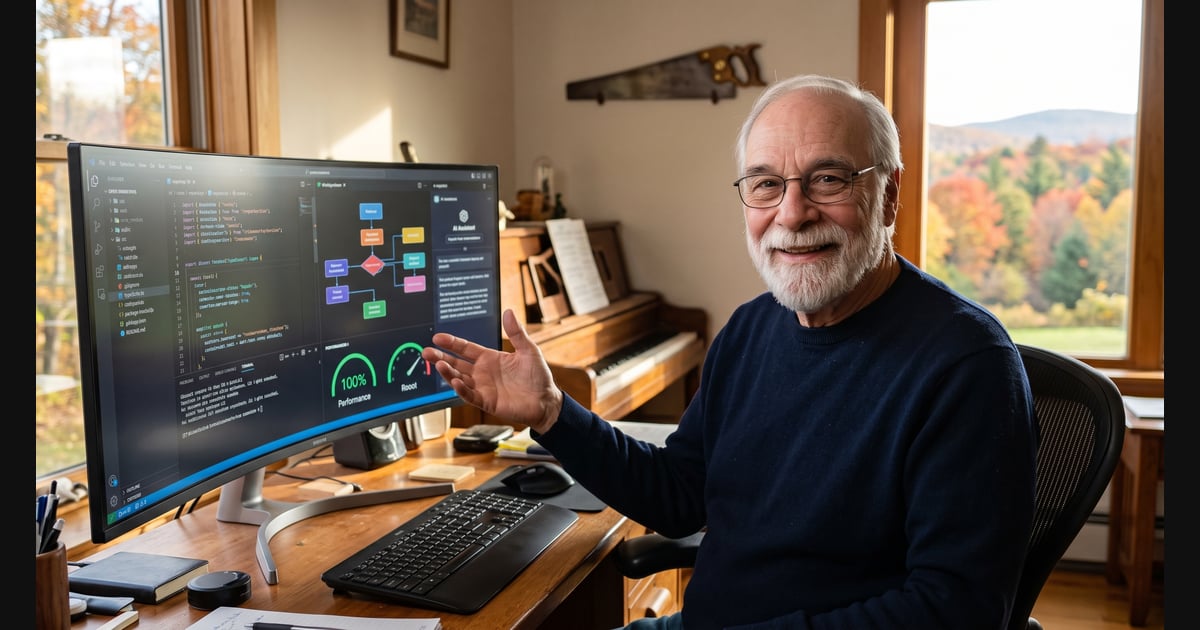
Here we are with just a sixth of the year remaining in 2026, and that geeky love for learning still keeps my engine humming. Even in retirement, I refuse to let my technical saw go dull. Earlier this year, I decided to completely overhaul my full-stack development toolbox. I dove headfirst into TypeScript, Next.js, Astro, and Payload. Just like that, I found myself building modern websites that completely max out search engine optimization and performance benchmarks. As a Liberation Technologist, this excites me to no end. When we master lean, high-performance tools, we can build independent digital spaces that prioritize human freedom and community empowerment over corporate platform dominance.
However, the biggest, bestest tool in my 2026 kit is undoubtedly the new wave of AI coding agents. Let’s be honest with each other as fellow travelers: these agents now write cleaner code than any human I know, and they have reached the point where they are designing application architectures better, too. In the first ten months of this year alone, I have "written" more working code than I could have produced in four full years doing it the old way. In the Liberation Technology movement, we view this kind of accessible AI as the modern printing press because it democratizes intelligence itself. Rather than trapping us, well-guided AI acts as an enabling infrastructure that expands our personal autonomy and builds brand-new capacities. It elevates us from mere tool-users into world-builders who can construct resilient, human-centered networks for a happy, healthy future.
In recovery and in life, we share our experience, strength, and hope so that nobody has to stay stuck in old patterns. Keeping our minds engaged is every bit as vital to our well-being as daily exercise, good nutrition, and rest. Part of our mission as Liberation Technologists is conducting critical technology education—demystifying these powerful tools so our friends and neighbors can become active creators rather than passive consumers. Stephen Covey was right about keeping the saw sharp, and I will add one crucial step: once that blade is gleaming, put it to work in the woodshop! You are never too old to pick up a new framework, mentor a fellow traveler, or launch a fresh project. Keep that saw sharp, my friends—learn, teach, and do!