
Reclaiming the AI Dividend from Wall Street’s New Robber Barons
AI can cure disease, optimize energy grids, and give us back our free time—unless we let modern oligarchs repeat the Gilded Age mistake of hoarding a shared human breakthrough.
When you trace the history of great infrastructure leaps in America—from the transcontinental railroads of the 1860s to the oil pipelines and electric grids of the early twentieth century—a familiar pattern emerges. Every transformative technology begins as a miracle of shared human ingenuity, often bankrolled by public land, public research, and generations of common knowledge. Then the robber barons step in. They build a tollbooth around the miracle, privatize the gains, socialize the systemic risks, and tell the working public that losing their livelihood is simply the price of progress.
Today, as I look across the landscape of artificial intelligence after more than thirty-five years in software engineering and architecture, I see us standing at that exact same historical crossroads.
Let’s be crystal clear about one thing first: we should not fear the technology itself. From an engineering standpoint, AI is not a passing Silicon Valley parlor trick or a speculative luxury. It is a foundational capability that can help us solve some of the hardest existential problems on the planet. Over four million researchers worldwide are already using tools like AlphaFold to map complex protein structures, compressing decades of drug discovery and biological research into months. In heavy manufacturing and utility networks, applied AI models are actively monitoring power grids and predicting hardware failures before they cascade, cutting energy waste by three to ten percent.
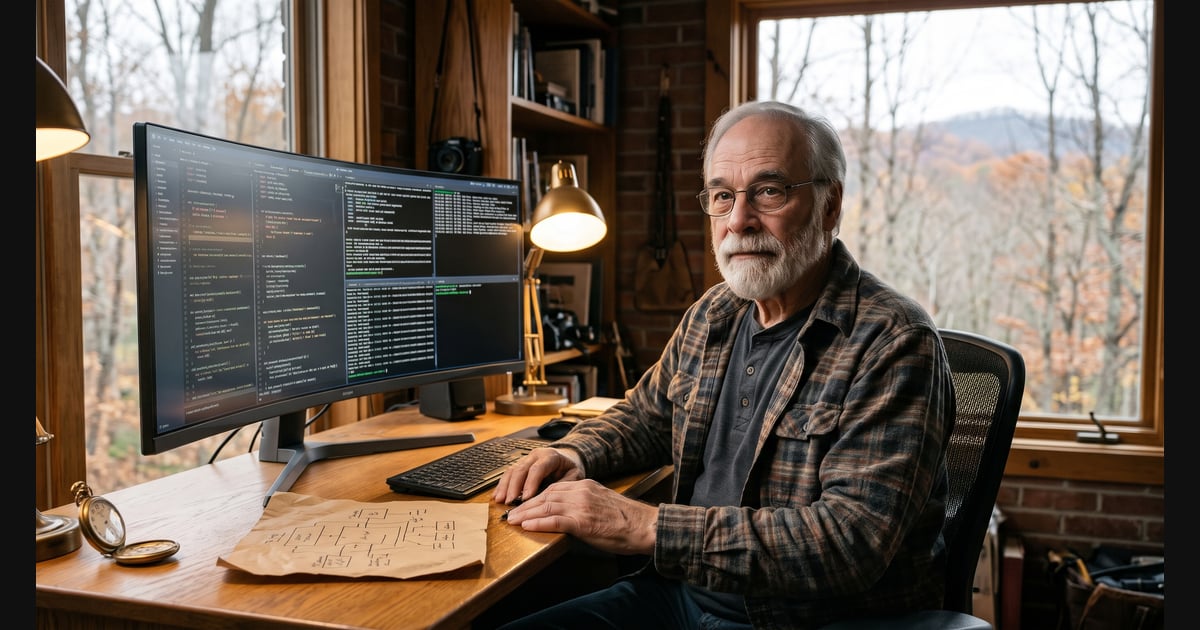
I see this transformative power firsthand at my own workbench every single day. I have been working deeply with AI for over two years now, and it has given me the ability to build and ship in a single day what used to take weeks. Far from replacing me or putting me out of work as a software engineer, it has allowed me to assemble and lead a team of AI agents much like the engineering teams I directed for decades as a VP of Development and CTO—except these engineers never call in sick, never complain, and write virtually flawless code when directed properly. That kind of direction requires what human seasoning does best: deeply understanding the underlying technology and seeing the big-picture architecture.
Used with that kind of human agency and wisdom, AI offers all of us a remarkably hopeful future. It holds the capacity to provide what people actually need—better health, cleaner infrastructure, more comfortable lives, and the most precious non-renewable resource any of us have: free time. When an afternoon of agent-assisted work replaces weeks of grueling cognitive drudgery, we win back hours to tend our gardens, make music, care for our neighbors, and live at a human pace.
So why are so many people understandably anxious? Because we remember how oligarchs behave when they corner a vital resource.
Right now, Wall Street and the tech monopolies are locked in an unprecedented gold rush. The top five hyperscalers are on track to spend over $600 billion in capital expenditures in 2026 alone, racing toward a three-trillion-dollar infrastructure buildout by 2028. That spending is consuming more than ninety percent of their operating cash flows, driving tech giants to issue over $100 billion in debt in a single quarter while propping up circular deals where they fund startups just to buy back their own cloud capacity.
Meanwhile, their grandiose financial spreadsheets are colliding with physical reality. Having studied electrical engineering before spending my career in software, I always look at where the electrons actually flow. You cannot run a three-trillion-dollar cloud on press releases. Connecting a new data center to regional power grids currently takes four to ten years—up to eighty-four months in major hubs—and high-voltage transformers face manufacturing lead times of two to four years. Even Wall Street is getting nervous, shifting into a ruthless "show me the money" phase that punishes executives who cannot prove an immediate return on their massive spending.
And how do corporate boards plan to pay off that mountain of debt and satisfy impatient shareholders? Instead of empowering workers to become force-multiplied architects, they plan to slash payroll.
Unlike earlier waves of automation that hollowed out factory floors, AI directly automates high-earning cognitive and white-collar work. When short-sighted corporations replace human workers with server racks, they trigger a massive fiscal trap that few politicians are brave enough to discuss honestly. Our entire public budget is built on taxing human labor at an average effective rate of roughly thirty percent, while capital gets off at fifteen to twenty percent. Every time a single dollar of economic value shifts from a human paycheck to an AI balance sheet, public tax revenue drops by ten to fifteen cents—right at the exact moment families need stronger public support. When workers push back against AI today, they aren't being backward Luddites; they are acting rationally to protect their families in an economy that offers them zero risk-sharing.
We don't have to accept the oligarchs' framing that our only choice is between technological stagnation and mass economic displacement. We can decouple human dignity and income from the corporate labor market through Universal Basic Income (UBI) and shared public ownership—what economists call Universal Basic Capital.
Empirical data already proves that trusting regular people works. In OpenResearch’s three-year guaranteed income study of 3,000 participants receiving $1,000 a month, people didn't quit building their lives; they bought food, paid rent, got healthcare, paid down debt, and reduced their working hours by just over an hour a week.
To scale this fairly—especially when a basic poverty floor costs roughly $784 billion net annually and displaced professionals face sudden income cliffs—we have to go deeper than corporate charity. Tech-sponsored handouts can easily become a form of pacification, buying our silence while a handful of executives keep total control over the models and the wealth. Instead, we need a true democratic dividend. By funding a national sovereign wealth fund through corporate profit taxes, reformed capital gains, and required public equity stakes in large AI enterprises—indexed directly to the growth of non-labor national income—every citizen becomes a shareholder in the automated economy.
Every large language model and neural network on Earth was trained on the collective writing, code, art, and publicly funded science of humanity. We built the foundation together. If we insist on computational justice—combining public dividends with AI tools that empower each of us as builders in our own communities—artificial intelligence won't be the final enclosure of the Gilded Age. It will be the tool that finally sets our time free.
Everything here is free. If this one helped you, there’s a tip jar.