
Prepping for Prepping: Is Starting Now Too Late for Us?
Governments now warn us to stockpile food, cash, and medicine for 90 days. While latecomers panic, 40 years of real food, sleep, exercise, and music build true biological sovereignty. Is starting now too late? Never—but the gap between two pills a day and ten is massive.
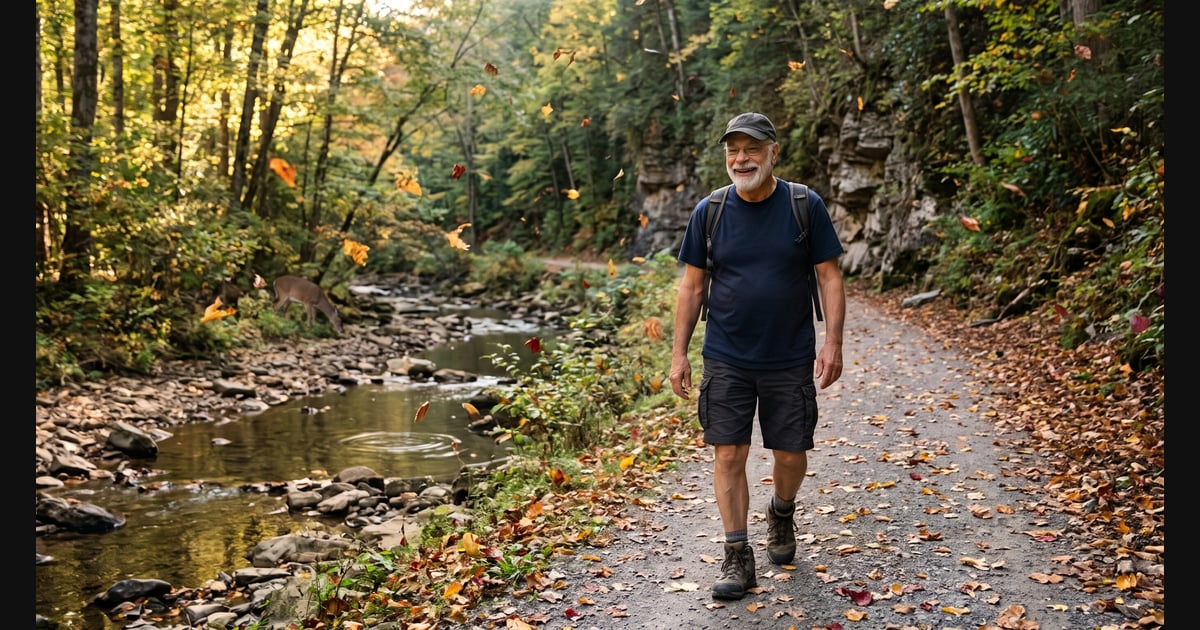
I am looking out my window right now at a glorious late-October afternoon, lacing up my boots for a ten-mile hike along a winding Appalachian creek rail-trail. The autumn canopy of gold and crimson reflecting off moving water is like deep, somatic therapy for the soul. We need that peace right now, because the news is full of panic. Governments everywhere are suddenly warning citizens to prep for three, ten, thirty, or even ninety days. They tell us to stockpile cash, food, water, medicine, and protection—the very baseline services of the system we long expected in exchange for our taxes and allegiance. Watching that social contract get flushed downstream has folks scrambling.
Those who have never prepared are panicking, buying buckets of freeze-dried rations. Back when I repaired computers in the Army and later architected fault-tolerant software systems, I learned a basic engineering truth: you cannot patch a brittle system five minutes before a crash and expect zero downtime. True resilience is built into the architecture long before the crisis hits. As a Liberation Technologist, I love using open-source AI and decentralized tools like Meshtastic to stay independent of failing institutions. Yet our most vital sovereign hardware is our own body and brain. If we have been "prepping for prepping" for four decades—eating home-cooked meals, sleeping deeply, hiking, and challenging our minds instead of binging Netflix and doom-scrolling—we are in a completely different position.
Think about that ninety-day medication warning. If you take two basic pills a day versus ten heavy pharmaceuticals, the freedom gap is massive. Consider the compounding side effects of ten daily prescriptions—and the sheer terror of a supply chain hiccup when your survival depends on a pharmacy counter. Long-term science backs this up. While population studies show associations rather than guaranteed individual outcomes, the numbers are eye-opening. The Million Veteran Program studied 720,000 people and found that men practicing eight healthy habits at age forty—including restorative sleep, nutritious food, and regular activity—were projected to live twenty-four years longer than those with none. A Harvard study similarly linked five healthy habits to twelve extra years of life and a 74% lower risk of dying during the study. Meanwhile, a review of nearly ten million people linked the ultra-processed Standard American Diet to a 66% higher risk of dying from heart disease, alongside diabetes, poor sleep, and depression.
Our brains need prepping, too. Social media algorithms are designed as a "rage machine" to hijack our neurobiology and exhaust us into apathy or rage. Practicing algorithmic resistance means turning off the screen and exercising our gray matter. When I sit at the piano, pick up my guitar or uke, or write code to push my computer to peak productivity, I am building cognitive reserve. A study of over 10,800 older adults found that playing a musical instrument lowers dementia risk by 35%, while daily listening cuts it by 39%. Brain scans even show denser gray matter in older musicians. Combine forty years of overall diet quality, exercise, and music, and a seventy-year-old gains roughly ten to twenty extra years of life and over a decade free of major disease. Of course, genetics and luck still play a part, so your own checkup numbers—like blood pressure, A1c, lipids, and waist size—tell your real story.
So, is starting now too late? As a fellow traveler on the road of recovery and health, I will give it to you straight: it is never too late to begin, but yeah, the forty-year difference is huge. We cannot rewrite the past four decades, all we can do is debug yesterday's code. What we can do is reclaim our agency today. We can use AI as a liberation tool to translate medical jargon and co-author our health narratives, cook a real meal tonight, strum a chord, and step away from the doom-scroll. Whether you walk ten miles beside a creek or ten minutes around the block, every healthy habit is an act of personal sovereignty. Let’s lace up our shoes and build that resilience together.