
From Black Monday to Bread and Circuses: Escaping the Machine
Thirty-nine years after the 1987 market crash, the automated machines making the numbers are still part of the problem. While algorithms feed us distractions and crumbs, we can choose to unplug from the spectacle, see the truth, and reclaim our freedom.
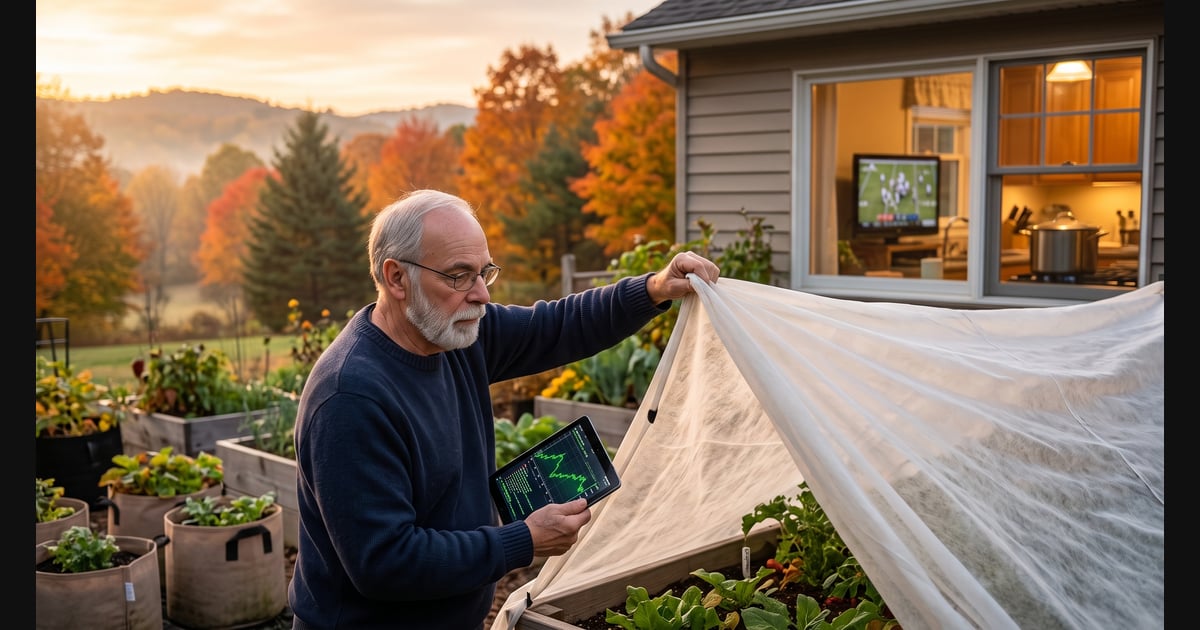
I spent the first hour of my morning outside uncovering my garden, rolling back the retractable sun shade that mutes the harsh midday glare in July and doubles as a cozy frost blanket during these crisp shoulder seasons. The mid-October air out here in the Appalachian hills has a real bite to it now, and the maples are putting on a dazzling show of fiery reds and golds. Coming inside to a warm kitchen and the rich, smoky smell of a slow-simmered pot of chili on the stove does wonders for the soul. After a solid night of sleep and a brisk morning chore, that kind of simple rhythm grounds you in what is actually real.
Then, I sat down with my coffee and smiled to get Face ID'ed into my iPad to check the morning news. Today is October 19, 2026—the 39th anniversary of Black Monday, the notorious 1987 crash when the Dow plunged 22.6% in a single day. Looking at the pre-market data this morning, the economy probably isn't going to crash today. Futures are actually ticking up slightly as dip-buyers jump back into AI stocks. Today, we have automated "circuit breakers" that pause trading if the S&P drops 7%.
But as someone who spent over 35 years in software engineering, from debugging early digital electronics to sitting in a windowed office, I look at these market reports and see the exact same ghost in the machine. Back in 1987, a shiny new thing called "program trading" and automated portfolio insurance created a mechanical feedback loop that dumped sell orders into a freefall. The machine that made the numbers was the problem. Today, with the Dow sitting near 52,000 and the Fear & Greed Index flashing "extreme fear" at 18, the machine hasn't been fixed—it has just been upgraded with generative AI bells and complex algorithm whistles.
In my recovery program, we talk a lot about growing up in homes where nobody talked about the elephant in the living room. We survived by looking at distractions while the foundation was cracking. When I look at our media ecosystem today, I see a giant, algorithmic version of that exact same family dysfunction.
The "machine" isn't just pricing stocks anymore; it is pricing our attention. While the tickers flash green and commentators obsess over tech earnings, we in the United States are kept almost completely in the dark about massive, existential shifts. How many of us are getting honest data on how the rise of BRICS and the shifting Petrodollar are rewiring global trade? Who is talking seriously about the true state of our climate, or the violent cost-of-living protests happening in Europe right now?
Instead, the algorithms feed us digital Bread and Circuses. We get football season kicking off in high definition, absurd spectacles like UFC fights hyped up as if they belong on the White House lawn, and endless partisan shouting matches. We are tossed economic crumbs while the centralized platforms harvest our anxiety for ad revenue. In my Liberation Technology world, I call this the "rage machine" and the "fog"—using AI to flood the zone with noise so we are too exhausted to notice what matters.
We don't have to play a rigged game. That is the whole joy of being a Liberation Technologist! We can use our geeky curiosity to step outside their panopticon. We can move our conversations to decentralized protocols like Nostr or Bluesky, where we choose our own algorithms instead of letting a billionaire's black box spoon-feed us distractions. We can use open-source AI locally on our own machines to research global economics, read international reports, and verify the truth for ourselves.
My fellow travelers, we don't have to settle for crumbs and circuses. Step away from the flashing numbers today. Cook a real meal from scratch, get a good night's sleep, and connect with your neighbors. When we clear the artificial noise out of our heads, we reclaim the freedom to build a resilient, honest world—one line of code and one garden bed at a time.