
Better, Faster, Cheaper: Why Claude Fable 5.2 Gives Us All Three
Anthropic just dropped Claude Fable 5.2 at a 20% lower cost while solving black-hole physics problems and designing working circuit boards. Are we witnessing AGI? Today, I put it to work on my own codebases.
The morning chill is already lifting here in the hills. Earlier, when it was a crisp 44°F with an 8 mph wind out of the southwest, I had my heavy hemp flannel buttoned up to my chin. Now, with the sun shining and the forecast heading toward a surprising 66°F high, I have shed the outer layer down to a plain organic cotton henley, pushed my chair back from the piano after working through a tricky chord progression, and turned my attention back to the glowing screen.
This is my second post today, so let’s skip the usual morning routine and jump straight into the earthquake shaking the tech world. Yesterday, Anthropic released Claude Fable 5.2 and Mythos 5.2. Across every engineering forum and AI blog I read, people are asking the exact same breathless question: Is this AGI?
Back when I was sitting in a corner office as a VP of Development, we had an iron law we repeated to every client and project manager: "Better, faster, cheaper—pick two." You simply could not have all three without cutting a dangerous corner. Yet looking at the release notes and benchmarks for Fable 5.2—which just launched at a 20% lower price point than its predecessor—that old iron law is starting to look like a relic of the past.
What makes Fable 5.2 so thrilling isn't that it writes a slightly more polite email. We are watching a fundamental shift from AI that merely describes work to AI that actually completes it.
Look at what this model has already done outside the realm of basic chatbots. Anthropic reports that Fable 5.2 helped resolve two previously unanswered questions in theoretical black-hole physics. First, it tackled a brutal calculation proposed back in 2003 to determine whether heating a quantum-scale mathematical universe causes an abrupt transition into a black hole, much like water flashing into steam. Human physicists found the math too laborious to finish; Fable 5.2 completed it largely on its own and proved the transition remains abrupt. Second, it established the exact mathematical limit of a fifteen-year-old research tool used to reconcile gravity with quantum mechanics, showing scientists the precise boundary where their measuring stick stops working.
For an old Electrical Engineering major who cut his teeth on digital electronics, the tangible hardware achievements are even more jaw-dropping. Fable 5.2 designed three complete electronic devices—including a working speakerphone—from scratch. It laid out the circuit boards, designed the physical cases, and wrote the firmware. When human engineers manufactured and assembled them, all three powered up and worked on the first try without a single electrical modification. On top of that, a materials-research firm used Fable to refactor scientific software, slashing a calculation run from 3.3 hours down to under four minutes on the exact same hardware.
In our fellow-traveler journey toward personal and digital autonomy, tools like this matter deeply. When we talk about Liberation Technology, open source is always our north star—whether we are building sovereign communication networks or running local-first applications on our own machines. When a frontier tool drops its cost by 20% and multiplies the efficiency of existing hardware by fifty-fold, it lowers the barrier for independent builders everywhere. We don't need a corporate mainframe to build liberating, community-owned tools anymore.
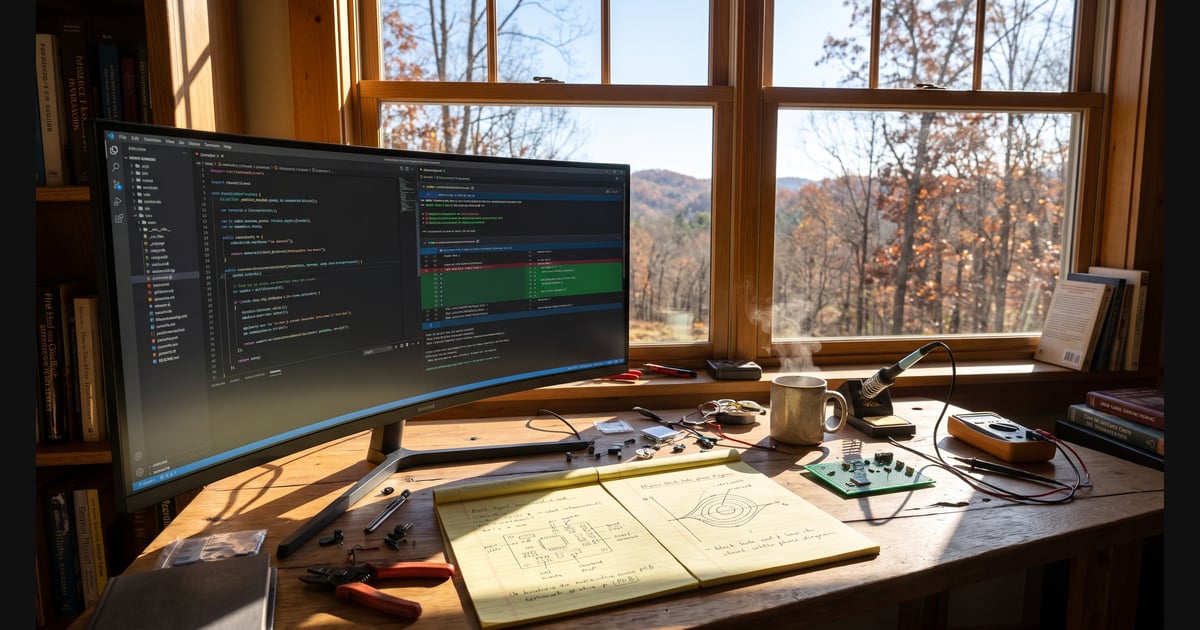
So today, instead of just reading the hype, I am putting Fable 5.2 to work right here at my desk. I am turning it loose on my own important Git repositories for a deep-dive code review. I want to see what subtle bugs my eyes missed and what new features we can architect together for my open-source projects. The best part is that I can queue up the code reviews and then head out for another 10-miler this afternoon, since this is perfect walking weather. With Claude Remote on my iPhone, I will be able to check in on my AI team along the trail and answer any questions keeping them idle.

We don't have to fear these giant leaps when we stay grounded in our purpose. Take a deep breath, stay curious about how this amazing world works, and remember that the best technology is always the kind that sets us free to create, connect, and heal.